Peace Lilies are tropical evergreen plants found in most houses and offices. They are grown because of their exotic green leaves and their ability to clean and purify the air we breathe. They are low-maintenance and easy-to-grow houseplants and can be grown both in soil and water.
Peace lilies originate from the tropical rainforests of America, under the forest canopy with indirect sunlight. While growing them in your house or offices, you must try to mimic the exact growing conditions similar to their native land to help them thrive.
With proper light, adequate water, correct fertilization, ideal temperature and , well-drained soil, and pruning, your Peace Lilies will give you their best evergreen look. With the correct maintenance, they will also produce beautiful white flowers once or twice a year.
If you are planning to grow Peace Lilies and looking for care tips for them, this article will help you with all the tips and tricks to maintain a healthy Peace Lily.

Please note: Simplify Plants is reader-supported. As an Amazon Associate, I earn from qualifying purchases made by our readers with no extra cost added to you all! Some links in the post are affiliate links and I get a commission from purchases made through links in the post.
How do I keep my peace lily happy?
Below are the 11 basic requirements of a healthy and thriving Peace Lily plant.
1. Provide bright indirect sunlight to your Peace Lily.
Peace Lilies need bright light without getting exposed to direct sun. You should keep the plant in a spot where there is bright sunlight but not direct.
In their native land, the Peace Lilies grow under forest canopies where they get indirect sunlight. So direct sunlight can give rise to various issues like brown spots or sunburns.
The best spot for Peace Lily is a north or east-facing window. This direction gets bright indirect sunlight throughout the day. A bright warm room with big windows works best for Peace Lilies.
If you do not have any windows on the north or east side, don’t worry. You can place them near any window. Make sure they do not get any direct sun. You can use curtains to create filters for the direct sun.
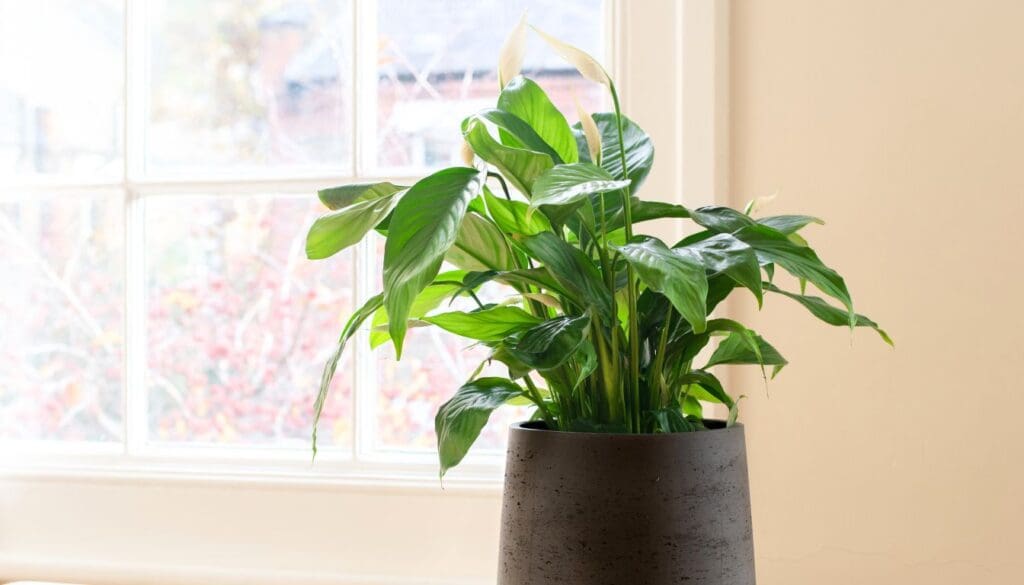
Though peace lilies can tolerate direct sun during the winters, that will be for a few hours. After that, you will have to protect them. You can move them a few feet away from the window if the sun is too hot and intense.
During the fall and winter months, they need low to moderate light. They continue dwelling in low light during the summers and springs, but you will need to give them bright indirect sunlight for good growth and abundant blooms.
Peace Lilies can grow under low lights also. But too low light will cause stunted growth.
However, you can use to give them adequate light to survive. Keep the light on for 12 to 14 hours. You can make it 16 to 18 in case of no additional sunlight, especially during cloudy weather.
Also read:
2. Provide infrequent deep watering with good quality water.

Watering the peace lilies depends on two things – the quality of water and quantity of water.
First, avoid using tap water. It contains chlorine, fluorine, bicarbonates, and other hard minerals, which affect the plant’s health. Consider using distilled water. You can collect rainwater and use it in the future.
If your only watering source is tap water, filter the water to get rid of the mineral content. If you do not have a filtering process, allow the water to sit outside for 24 hours. The minerals will evaporate into the air. This will make the water harmless and free from all hard minerals.
Daily watering is not needed. Maintaining a watering schedule is also not required. Every plant has different watering needs. Water your peace lily thoroughly once a week. This will keep the soil moist on other days of the week.
You should constantly check the moisture level of the soil. Poke your finger into the soil. If the top half part of the soil feels dry, you can water the plant. Lift the pot to feel the weight to understand if it needs water. However, unlike other houseplants, peace lily will show you wilted leaves when they need water.
The watering needs vary from season to season. During the hot summer seasons, Peace Lilies need more water due to the high evaporation rate. During the winters, you can decrease watering.
Allow the soil to dry up before you jump to the next watering session. Use room temperature or tepid water to water the Peace Lilies.