
n a television landscape dominated by oversized egos and an endless thirst for screen time, it is incredibly rare for a major star to voluntarily step away from a highly coveted, prime-time hosting gig. Yet, that is exactly what the undisputed queen of British broadcasting, Claudia Winkleman, has just done. In a move that has sent shockwaves through the entertainment industry and left millions of her loyal fans deeply saddened, the beloved presenter has officially announced that she is quitting her self-titled BBC chat show, “The Claudia Winkleman Show,” after just one single series. Her reason? A refreshingly raw, unapologetically honest admission that she simply found the experience too nerve-wracking to properly enjoy.
At 54 years old, Claudia Winkleman is a true veteran of the screen. With her signature heavy fringe, smudged eyeliner, and self-deprecating wit, she has spent decades cementing her status as one of the most bankable and universally adored figures in the United Kingdom. We are accustomed to seeing her confidently command grand stages, whether she is wrangling glitter-clad celebrities on the ballroom floor of “Strictly Come Dancing” or playing the delightfully sinister puppet master in a shadowy Scottish castle on “The Traitors.” Therefore, the revelation that she was secretly battling intense, crippling nerves on her own chat show feels surprisingly human, entirely relatable, and completely endearing to her vast audience.
In a statement released today, Winkleman addressed her sudden departure with the exact kind of warmth and humility that has defined her entire career. “I’m incredibly grateful to the BBC for giving me the opportunity, to the guests who agreed to come and chat to me, and the production team who were simply excellent,” she began, immediately shifting the praise away from herself and onto the hardworking crew and her celebrity guests. But it was her subsequent sentence that truly captured the hearts of the public. “Sometimes you have to try something to see how it fits, and I realised I was just too nervous to enjoy it. Maybe one day I will give it another try, but for now I already have the best jobs in the world and absolutely love the shows I’m doing.”
This deeply candid confession is a massive breath of fresh air in an industry that usually hides behind vague PR phrases like “scheduling conflicts” or “creative differences” when a high-profile project is quietly shelved. Winkleman’s willingness to admit that her own anxiety and discomfort outweighed the prestige of having her name in the title of a flagship BBC One programme is a masterclass in self-awareness. It sends a powerful, necessary message to viewers: it is perfectly acceptable to walk away from something that looks spectacular on paper if it is severely detrimental to your mental wellbeing or peace of mind. By publicly acknowledging her vulnerabilities, she has destigmatised the very normal feeling of imposter syndrome, proving that even the most seasoned professionals can feel utterly overwhelmed when thrust into a different kind of spotlight.
To fully understand the immense pressure Winkleman was under, one must look at the specific real estate she was occupying on the television schedule. “The Claudia Winkleman Show” was commissioned to fill the prestigious Friday nighttime slot on BBC One—a slot that has been historically and famously dominated by the undisputed king of the modern chat show, Graham Norton. When Norton announced in 2022 that he would be slightly scaling back the number of episodes he produces annually, a gaping hole was left in the schedule. Filling that specific gap is an incredibly tall order for anyone. The British public has grown deeply accustomed to a very specific flavour of Friday night entertainment: A-list stars, lubricated by a glass of wine, sharing raucous anecdotes on a sprawling red sofa.
The show was produced by So Television, the exact same production powerhouse behind the multi-award-winning “Graham Norton Show.” Because of this, the expectations were astronomical, and the comparisons between the two presenters were completely inevitable. However, instead of buckling under the weight of trying to replicate Norton’s signature format, Winkleman leaned into her own unique brand of chaotic, conversational charm.
Even Graham Norton himself gave her his ultimate blessing. In response to her performance on the Friday night stage, the veteran broadcaster unequivocally stated that she had absolutely ‘nailed it.’ He observed her run with genuine respect, telling the press, “What Claudia did was the Claudia Winkleman show, and that’s what she’s supposed to be doing. She shouldn’t be trying to be me.” Norton’s supportive comments highlight the immense respect Winkleman commands within the television industry. She did not try to imitate the slick, well-oiled machine of Norton’s iconic programme. Instead, she brought her own slightly neurotic, deeply empathetic, and highly inquisitive nature to the velvet sofa, creating a distinctly different atmosphere.
Looking back at the brief lifespan of “The Claudia Winkleman Show,” it is extremely important to note that her departure is absolutely not the result of a commercial failure. By all traditional broadcasting metrics, the series was actually a resounding success. The premiere episode, which aired on the 13th of March 2026, brought in a phenomenal 1.5 million overnight viewers. To put that magnificent number into perspective, this impressive debut actually beat the final episode of “The Graham Norton Show’s” preceding series by roughly 200,000 viewers.
Throughout its run, Winkleman welcomed an absolutely stellar lineup of famous faces, bringing her trademark curiosity to in-depth interviews with the likes of British comedy royalty Jennifer Saunders, “Schitt’s Creek” creator and beloved star Dan Levy, and Hollywood eccentric Jeff Goldblum. The interactions were genuinely engaging, largely because Winkleman possesses a rare, highly sought-after ability to make massive, globally recognised celebrities feel as though they are simply gossiping with a close friend in the corner of a local pub.
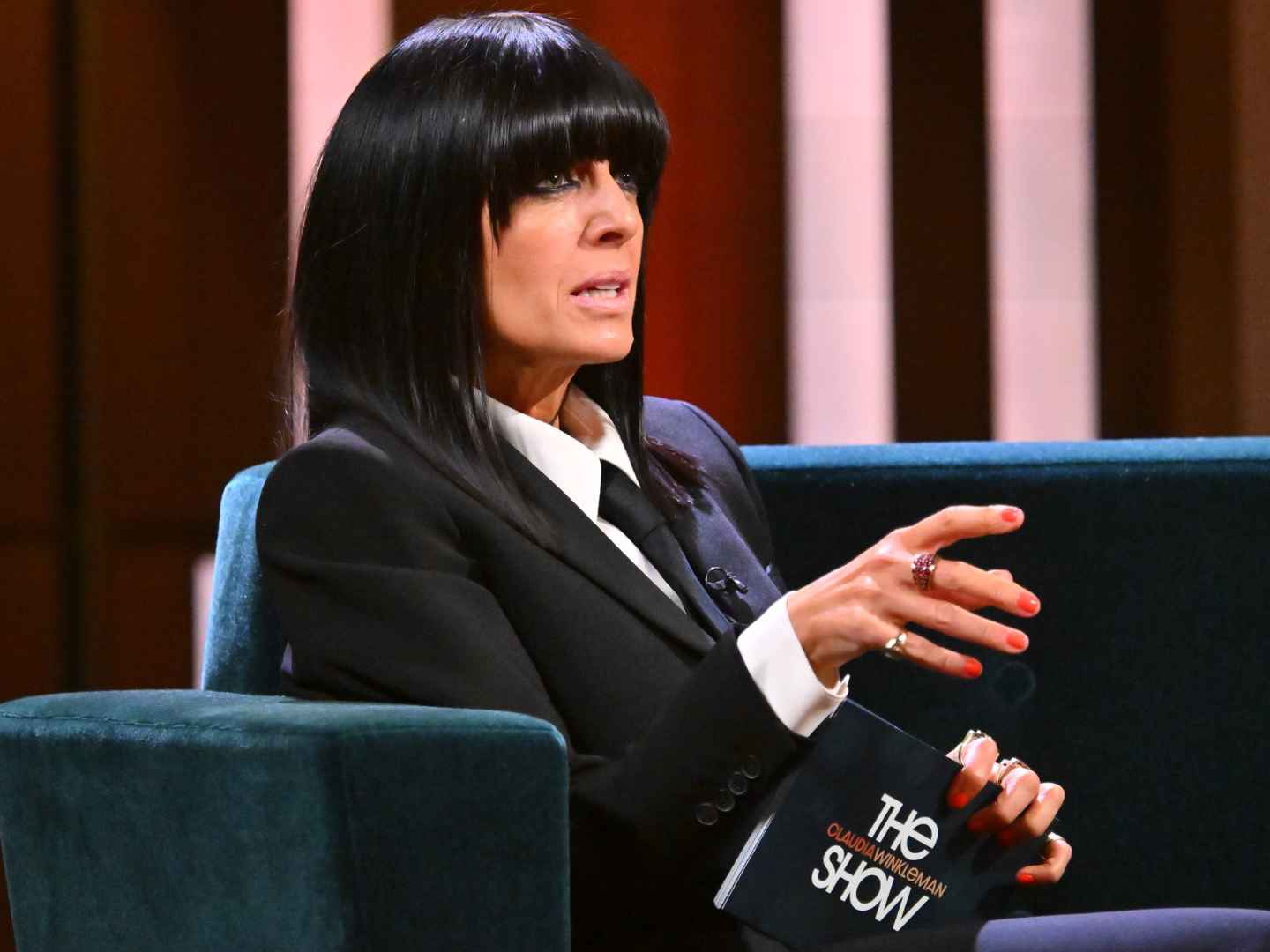
Yet, despite the strong ratings, the undeniable quality of the guest list, and the brilliant conversations, Winkleman’s self-deprecation was a constant, inescapable running theme. Even before the cameras started rolling for the very first time, she had predicted her own internal struggles, jokingly telling the press, “I’m obviously going to be awful, that goes without saying, but I’m over the moon they’re letting me try.” She candidly and prophetically added, “I probably said yes because of ego, I don’t know.” As the series aired and reviews began to trickle in—some glowing, some inevitably mixed—she continued to critique her own performance heavily. She famously described the very first episode as ‘so bad’ and publicly expressed hope that she would ‘hopefully be less painful’ for the audience as the weeks progressed. Looking back now, this was clearly not just false modesty for the sake of a laugh; it was the genuine manifestation of the crippling nerves she has now officially cited as her reason for leaving the project behind.
Winkleman’s brave decision to step down from her chat show cannot, and should not, be viewed in isolation. It follows another massive, seismic shift in her career that occurred just a few short months prior. In December 2025, the nation watched through floods of tears as Winkleman and her long-time co-host, Tess Daly, presented their final ever episode of “Strictly Come Dancing.” After an astonishing 15 years on the beloved BBC ballroom dancing competition, Winkleman chose to walk away, citing a mutual desire with Daly to ‘end on a high.’
When discussing her Strictly exit earlier this year, she made it perfectly clear that there was no bad blood, no hidden scandal, and no dramatic behind-the-scenes feud that forced her hand. “It is a genuinely beautiful show to be part of. Almost every single person who’s taken part is happy they did. So no, it wasn’t that,” she thoughtfully explained. Her departure paved the way for a brand new era of the Saturday night juggernaut, with presenter Emma Willis, comedian Josh Widdicombe, and professional dancer Johannes Radebe stepping up to fill the immense shoes left behind by the iconic, history-making duo.
This specific pattern reveals a fascinating and highly admirable aspect of Winkleman’s professional philosophy. She possesses an incredibly rare trait in the cutthroat entertainment industry: the innate ability to know exactly when to leave the party. She refuses to outstay her welcome, whether it is after 15 glorious years of sequins, fake tan, and dancing, or just one single series of a commercially successful but personally anxiety-inducing chat show. She clearly prioritises her own happiness, mental wellbeing, and artistic satisfaction over longevity or financial gain for the sheer sake of it.
So, where does this sudden resignation leave the beloved presenter? Anxious fans need not panic, as she is incredibly far from retiring from our television screens. As Ed Havard, the respected director of entertainment at the BBC, warmly noted while publicly supporting her decision to step down: “Claudia’s warmth and quick wit made The Claudia Winkleman Show an absolute joy. Whilst we loved the show, we fully respect her decision and would like to thank Claudia and the brilliant team at So Television for bringing the series to screen on the BBC.” Havard added a thrilling tease for the future: “As the host of the country’s most-watched show, Claudia will be back on the BBC very soon when The Celebrity Traitors returns later this year, and we can’t wait to see what she has in store for the new band of celebs.”
Havard is, of course, referring to the absolute cultural juggernaut that is “The Traitors.” While the traditional, bright-lights studio chat show format may have inadvertently brought out her worst nerves, striding through the atmospheric, dimly lit halls of a Scottish castle, shrouded in thick tweed and delivering deliciously dramatic news to a group of terrified contestants, has proven to be the role she was absolutely born to play. “The Traitors” has fundamentally redefined reality television in the UK over the last few years, and Winkleman’s mischievous, highly theatrical, yet deeply empathetic hosting style is the very glue that holds the gripping psychological game together. She is in her absolute element on that set, perfectly balancing the camp, murderous drama with genuine emotional investment in the innocent faithfuls and the deceitful traitors alike.
Furthermore, she is heavily set to host the highly anticipated celebrity spin-off, “The Celebrity Traitors,” which promises to be one of the biggest, most talked-about television events of the entire year. By bravely clearing her schedule of the anxiety-inducing Friday night chat show, she is freeing up both her valuable time and her crucial emotional bandwidth to focus entirely on the television projects that truly bring her joy and allow her to shine brightest.
Ultimately, Claudia Winkleman’s brief stint as a solo Friday night chat show host should absolutely not be viewed as a failure, but rather as a bold, necessary, and triumphant experiment. She stepped wildly out of her established comfort zone, achieved phenomenal viewing figures that rivalled broadcasting legends, secured incredible, global A-list guests, and thoroughly earned the respect of the reigning king of the genre, Graham Norton. And then, having proved beyond a shadow of a doubt that she absolutely could do it if she wanted to, she gracefully, powerfully decided that she simply did not want to.
In doing so, she has offered the public and her peers a vital lesson in self-preservation and boundary-setting. Professional success is not just about constantly climbing to the highest peak; it is also about having the profound wisdom to recognise when the view from the top isn’t worth the internal vertigo. Winkleman has reminded us all that it is entirely acceptable to prioritise joy and mental peace over industry prestige. We will undoubtedly miss seeing her on Friday nights, asking brilliant, delightfully off-the-wall questions to the Hollywood elite from the comfort of a velvet sofa. However, we can take immense comfort in knowing that when she does appear on our screens—draped in heavy, dramatic knitwear, orchestrating the ultimate game of television murder and deception—she will be there because she genuinely, passionately loves every single second of it. And frankly, that is exactly the kind of authentic television we all want to watch.


