
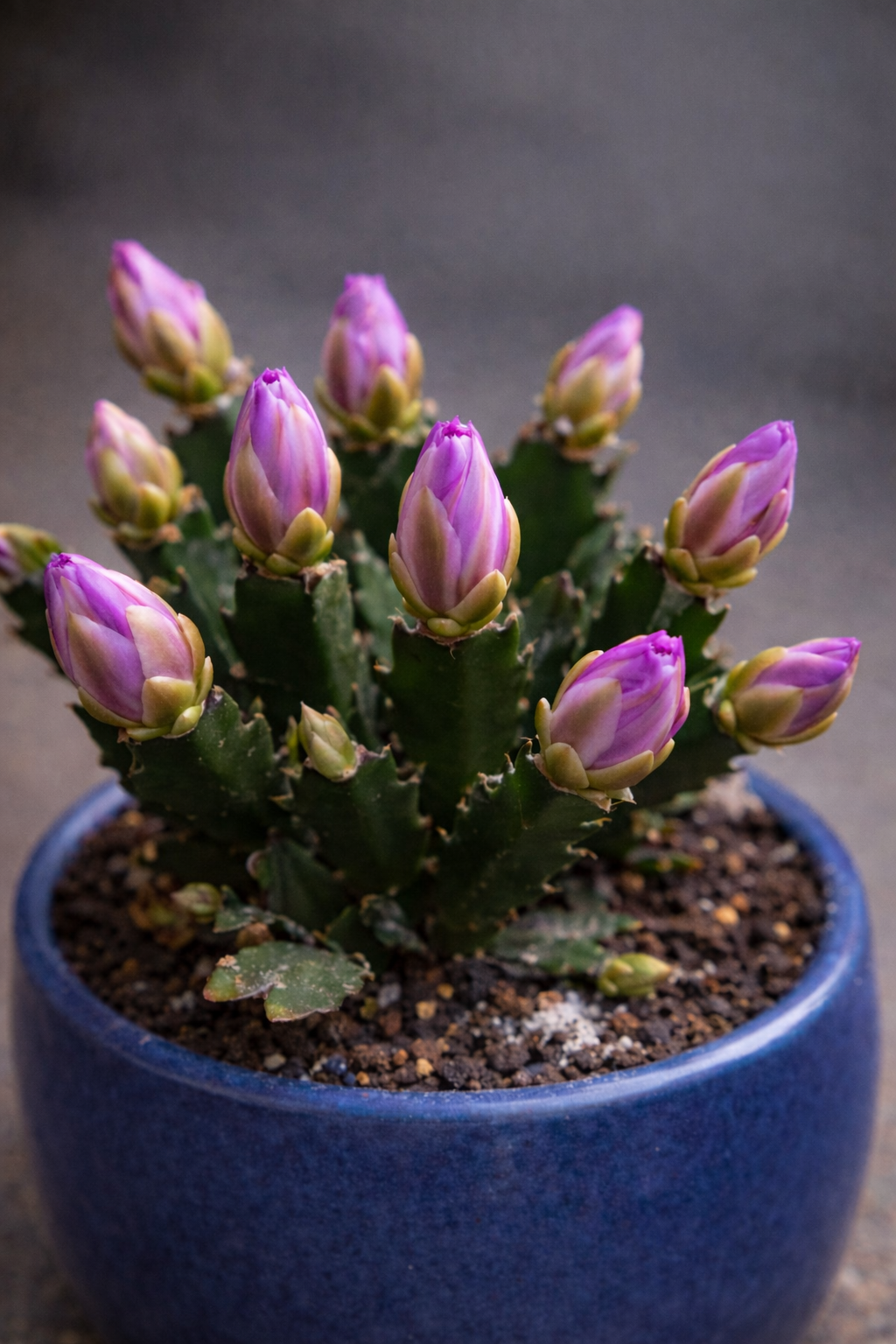
Few houseplants are as rewarding as a Christmas cactus covered in colorful winter blooms. So when buds appear but never open—or suddenly drop—it’s frustrating. The good news? In most cases, your plant isn’t weak or dying. It’s reacting to one or more indoor care mistakes, and once you fix them, blooming becomes predictable.
This guide explains exactly why Christmas cactus buds fail, the #1 mistake most homeowners make, and how to correct it step by step.
Understanding How Christmas Cactus Blooms
Christmas cactus (Schlumbergera) is not a desert cactus. It’s a tropical forest cactus that grows attached to trees in humid rainforests. Its buds are sensitive to environmental changes—especially indoors.
For buds to fully open, the plant needs:
- Stable temperatures
- Consistent moisture
- Correct light cycles
- Minimal disturbance
When any of these are disrupted, the plant protects itself by aborting the buds.
The #1 Indoor Care Mistake: Moving the Plant
Once buds form, moving your Christmas cactus is the most common reason they fail to open.
Why This Matters
Christmas cactus buds are extremely sensitive to:
- Temperature changes
- Light direction changes
- Airflow differences
Moving the plant—even a few feet—can cause:
- Bud drop
- Buds drying up
- Buds staying closed indefinitely
What to Do Instead
- Choose the blooming location before buds appear
- Once buds form, do not move the plant
- Avoid rotating the pot
Stability is more important than perfect conditions.
Other Common Reasons Buds Never Open
1. Temperature Is Too Warm
Christmas cactus blooms best in cool indoor conditions.
Ideal temperatures:
- Day: 60–70°F (15–21°C)
- Night: 55–65°F (13–18°C)
Too warm = buds stall or drop.
Fix:
- Keep away from heaters, fireplaces, and warm electronics
- Cooler nights help buds mature properly
2. Dry Indoor Air
Dry air causes buds to:
- Shrivel
- Dry out
- Fall off before opening
Fix:
- Place a humidity tray under the pot
- Group plants together
- Lightly mist the air (not the buds directly)
Christmas cactus prefers moderate humidity, especially during bud development.
3. Inconsistent Watering
Both underwatering and overwatering cause bud failure.
Signs of trouble:
- Soil completely dry for days → bud drop
- Constantly wet soil → root stress
Correct approach:
- Water when the top 1 inch (2–3 cm) of soil feels dry
- Ensure excellent drainage
- Never let the pot sit in standing water
Consistency matters more than frequency.
4. Sudden Light Changes
Once buds form, changes in light exposure can shock the plant.
Avoid:
- Moving from low light to bright sun
- Placing near grow lights suddenly
- Long hours of direct sunlight
Best light:
- Bright, indirect light
- Gentle morning sun only
5. Drafts and Airflow
Cold drafts or hot air blowing directly on buds can stop blooming.
Common problem spots:
- Near windows at night
- Close to doors
- Under AC vents or heaters
Fix:
- Keep the plant in a draft-free area
- Stable air = healthy buds
What NOT to Do During Bud Stage
Many well-meaning actions actually prevent blooming:
❌ Repotting ❌ Fertilizing heavily ❌ Pruning ❌ Moving the plant
Once buds appear, leave the plant alone as much as possible.
How Long Until Buds Open?
After buds form, expect:
- 3–5 weeks before full bloom
- Cooler temperatures slow but improve flowering
Patience is key—interfering delays results.
Final Thoughts
When Christmas cactus buds never open, the issue is rarely the plant itself. In most homes, the problem comes down to movement, temperature swings, or indoor stress.
Give your plant:
- Stability
- Consistent moisture
- Cool nights
- Gentle light
And it will reward you with spectacular blooms year after year.
🌵 A calm plant is a blooming plant.
Want more Christmas cactus care tips? Check out our complete guides on propagation, reblooming, and winter care.


