
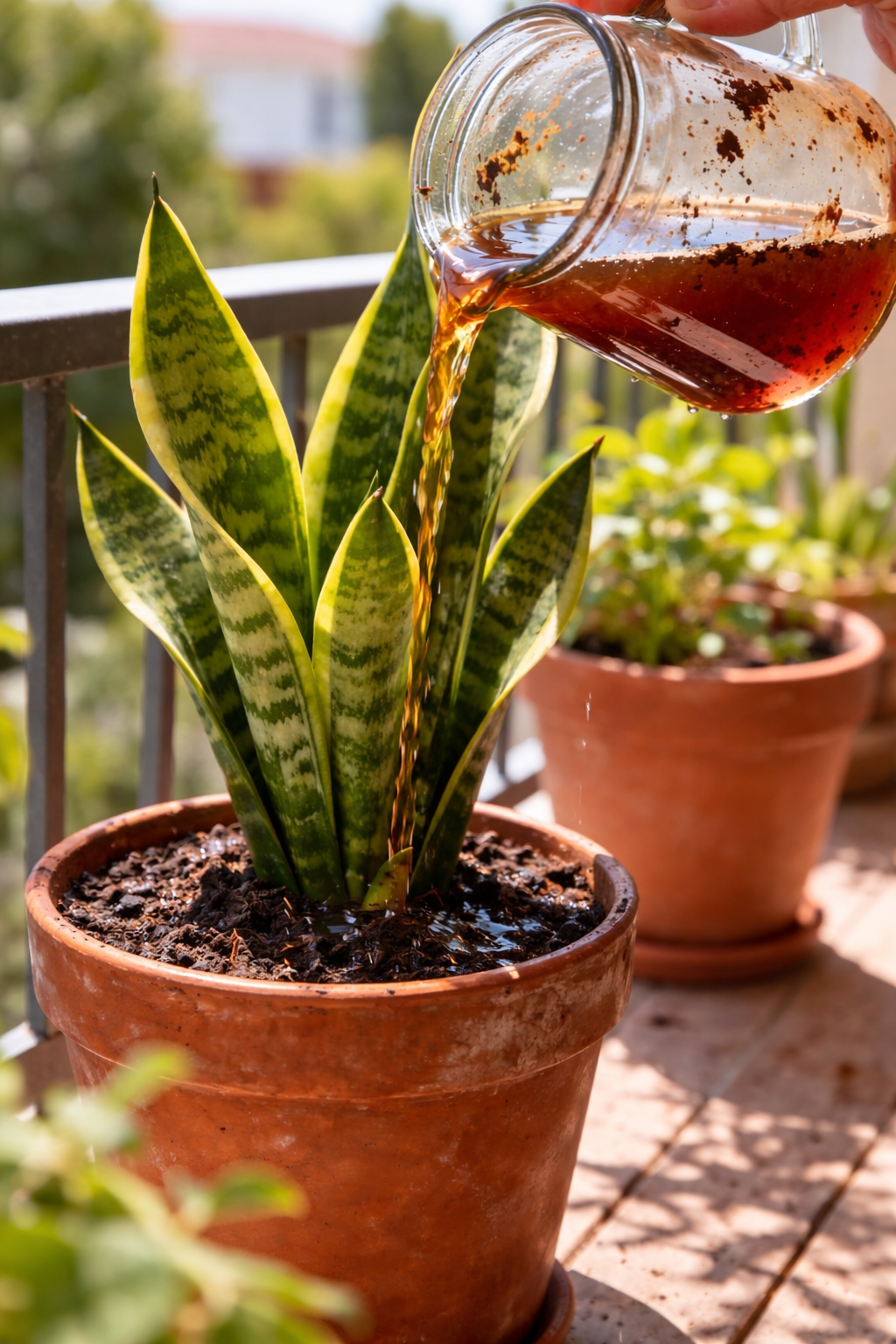
Snake plants (Sansevieria, also known as Dracaena trifasciata) are famous for being tough, low-maintenance houseplants. But if you want yours to grow faster, produce stronger leaves, and look fuller and greener, proper feeding is the secret most people overlook.
Many plant owners either overfeed (which can burn roots) or never feed at all, which leads to slow, weak growth. The key is knowing what, when, and how to feed your snake plant correctly.
🌿 Why Snake Plants Need Feeding
Snake plants grow slowly by nature, but they still need nutrients to:
-
Develop thick, upright leaves
-
Maintain deep green color and variegation
-
Grow new pups (baby plants)
-
Strengthen roots against rot and stress
Without nutrients, they may survive — but they won’t truly thrive.
🥄 The Best Fertilizer for Snake Plants
The ideal fertilizer should be mild and balanced, because snake plants are light feeders.
Best options:
-
Balanced liquid fertilizer (like 10-10-10 or 20-20-20 diluted)
-
Organic compost tea
-
Rice water (very popular natural option)
-
Worm castings mixed into soil
Avoid strong, high-nitrogen fertilizers — they can cause soft, weak leaves.
⏰ When to Feed for Maximum Growth
Timing matters more than quantity.
Feed ONLY during the growing season:
-
Spring through early autumn (March–September)
-
Every 4–6 weeks is enough
Never fertilize in winter — the plant is dormant and cannot absorb nutrients properly.
💧 The Correct Feeding Method (Most Important Step)
This is where many people make mistakes.
Step-by-step method:
1️⃣ Always water the soil lightly first
Dry roots can burn if fertilizer is applied directly.
2️⃣ Dilute fertilizer to half strength
Snake plants prefer gentle feeding.
3️⃣ Apply around the soil edge, not the center
This encourages strong root expansion.
4️⃣ Never let fertilizer sit in standing water
Good drainage is essential.
🚫 Common Feeding Mistakes to Avoid
-
Feeding too often (causes root damage)
-
Using strong undiluted fertilizer
-
Fertilizing during winter dormancy
-
Applying to dry soil
-
Overwatering after feeding
Remember: Less is always better than too much.
🌱 Signs Your Snake Plant Is Well Fed
A properly nourished snake plant will show:
-
New upright leaves appearing regularly
-
Strong, firm leaf texture
-
Rich green color with sharp patterns
-
Faster pup production
✨ Bonus Natural Feeding Trick
Once a month, you can use diluted rice water to gently nourish your snake plant. It provides minerals, encourages root health, and is completely safe when used sparingly.
Final Tip
Snake plants don’t need frequent feeding — they need smart feeding. With the right balance, your plant will grow taller, fuller, and healthier without stress.


