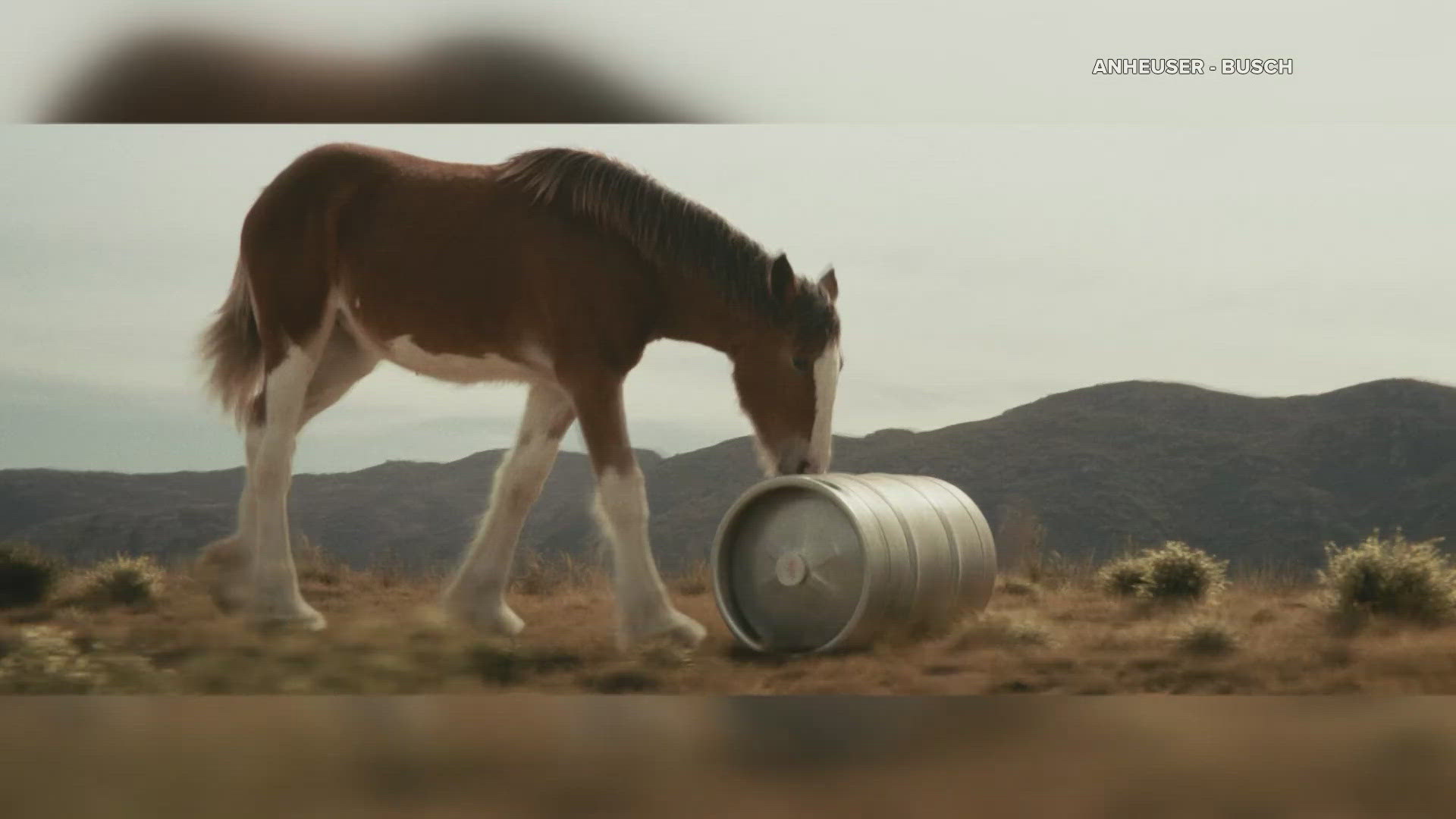


In a Super Bowl LX dominated by rapid-fire edits, celebrity cameos, and CGI spectacle, Budweiser made a move that felt almost rebellious: they slowed down.
No explosions.
No punchlines.
No surprise influencer reveal.
Just a Clydesdale. A bald eagle. And a quiet stretch of American landscape that felt bigger than the game itself.
And somehow, that simplicity didn’t just survive the chaos — it conquered it.
A Risk in the Age of Noise
Modern Super Bowl advertising has become a high-stakes arms race. Brands pour millions into visual effects, A-list talent, and rapid pacing designed to stop thumbs from scrolling and eyes from wandering.
Budweiser chose the opposite strategy.
Their spot, quickly nicknamed “Unlikely Alliance” by viewers online, centered on a slow-building connection between two enduring symbols: the iconic Clydesdale and the bald eagle. The camera lingered. The music swelled gradually. Dialogue was minimal — almost nonexistent.
In an era where brands fear silence, Budweiser embraced it.
Marketing analysts have since described the move as a calculated gamble. Slowing down in the most-watched broadcast of the year is risky. Attention spans are short. Audiences expect spectacle.
But that silence became the hook.
Why It Worked
The power of the ad wasn’t in what happened — it was in what didn’t.
No forced humor.
No heavy-handed slogans.
No overt product push.
Instead, viewers were invited to feel something. The horse standing steady. The eagle circling above. Two symbols long associated with strength, endurance, and identity — presented without irony.
Within minutes of airing, social media feeds filled with clips of the final shot: the eagle descending as the Clydesdale remains still, unflinching. That moment — quiet, almost reverent — became the emotional centerpiece of the night.
Industry trackers reported unusually high emotional engagement scores, with many calling it one of the most resonant Super Bowl spots in recent memory. While competitors chased volume, Budweiser captured stillness.
The “Great Reset” in Advertising?
Some insiders are already referring to the ad as a potential turning point — a “Great Reset” in Super Bowl marketing.
For years, brands have equated bigger with better. Faster with smarter. Louder with more effective.
But this ad suggested something different: that authenticity, when executed with confidence, can outperform spectacle.
It also tapped into a broader cultural shift. Audiences in 2026 are increasingly skeptical of overproduction. They crave sincerity. They want meaning — not just moments engineered for virality.
Budweiser didn’t announce that shift. They embodied it.
The Final Three Seconds Everyone Is Talking About
And then there’s the ending.
In the last three seconds, the eagle’s movement and the horse’s stillness create a visual balance that feels intentional — almost symbolic. The camera doesn’t rush away. It holds. It lets the connection breathe.
Viewers online began dissecting that frame almost immediately. Was it about unity? Endurance? Protection? A return to roots?
Budweiser never spells it out.
That restraint may be the ad’s most powerful choice.
By refusing to over-explain, the brand allowed the audience to project their own meaning onto the image. And in marketing, when viewers complete the message themselves, it tends to last longer.
More Than a Commercial
What makes this moment stand out isn’t just that it was emotional. Super Bowl ads aim for emotion every year.
What made it different was the confidence.
Confidence to resist trends.
Confidence to trust the audience.
Confidence to believe that two timeless symbols could speak louder than any digital effect.
In a night designed for spectacle, Budweiser proved that sometimes the boldest move is restraint.
And judging by the reactions, shares, and endless replays of that final frame, the gamble paid off.
The real question now isn’t whether the ad won the night.
It’s whether it quietly changed the rules for everyone else.