

Few television characters spark debate the way Beth Dutton does. In a series built on power, loyalty, and land wars, she somehow stands above the chaos — sharper, louder, and more unapologetic than anyone else in Yellowstone.
And that’s exactly why audiences can’t agree on her.
Portrayed with explosive intensity by Kelly Reilly, Beth isn’t written to be liked. She’s written to dominate the room. The question is: does that make her iconic — or unbearable?
The Case for Loving Beth
To many fans, Beth represents something rare on television: a female character who refuses to soften herself for anyone.
She’s brilliant in the boardroom.
Merciless in confrontation.
Fiercely loyal to her father and the Yellowstone legacy.
Beth doesn’t play defense. She attacks first. And in a world where power is everything, that aggression reads as strength.
Her love story with Rip adds another layer. Beneath the fire is vulnerability — but she never allows it to weaken her. Instead, it sharpens her edges.

For supporters, Beth is empowerment without apology.
The Case Against Her
But for just as many viewers, Beth crosses a line.
Her cruelty can feel excessive.
Her insults can feel relentless.
Her moral compass often swings toward vengeance rather than justice.
Critics argue that she rarely evolves. That her trauma becomes justification for destruction. That she burns down everything in her path and calls it loyalty.
The same traits that make her magnetic can also make her exhausting.
Trauma, Control, and Complexity
What makes Beth fascinating isn’t just her strength — it’s her damage.
Her past is not a footnote; it’s the engine driving her behavior. Control is her armor. Aggression is her shield. Every cutting remark, every calculated move, stems from a deep refusal to ever feel powerless again.
That psychological layer is why she endures as more than a stereotype.
She isn’t simply “the tough woman.”
She’s a woman who decided softness was too dangerous.
And that decision shapes every relationship she touches.
A Character Designed to Polarize
The genius of Beth Dutton is that she isn’t meant to be universally admired.
She’s a litmus test.
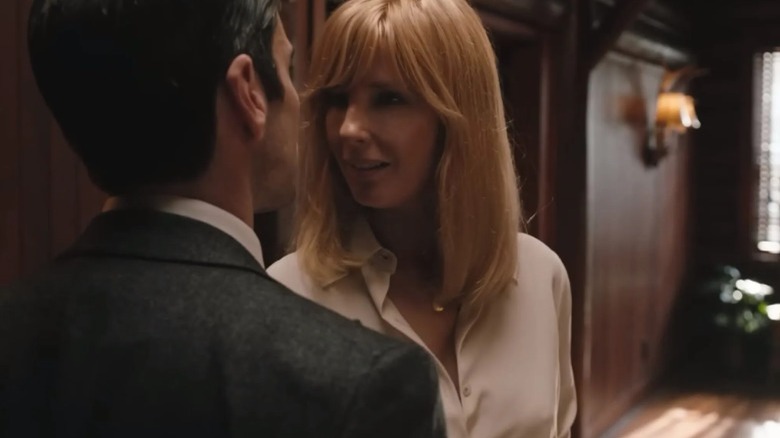
If you value loyalty above all else, she’s heroic.
If you value empathy and restraint, she’s destructive.
That tension fuels discussion season after season. In a television landscape crowded with safe characters, Beth remains volatile — and volatility keeps audiences talking.
Why She Still Matters
Love her or hate her, Beth Dutton is unforgettable.
She dominates scenes.
She drives conflict.
She embodies the emotional extremes of the Yellowstone universe.
And perhaps that’s the point.

In a story about land and legacy, Beth represents the cost of protecting both. She is what happens when devotion turns feral. When intelligence meets unchecked fury.
She isn’t easy to root for.
But she’s impossible to ignore.
So the real question isn’t whether Beth Dutton is too much.
It’s whether Yellowstone would be nearly as powerful without her.


