
VIDEO:
Comedy has its fair share of great moments, but some transcend time and leave a lasting impact. One such moment is when Tim Conway broke Harvey Korman on The Carol Burnett Show—a legendary comedy moment that continues to make audiences laugh uncontrollably even decades later.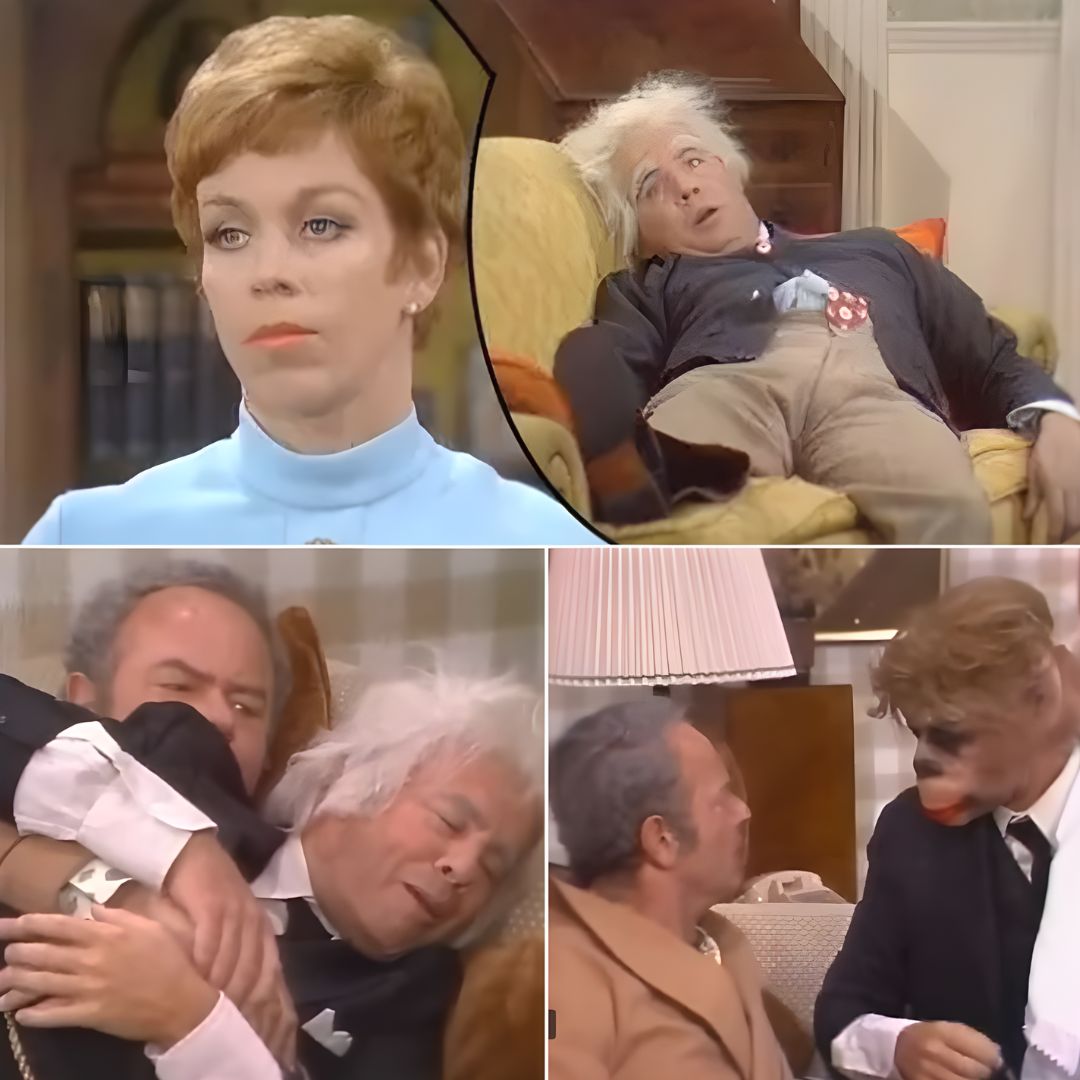
Conway was not just a comedian; he was a master of chaos, expertly weaving moments of absurdity with pinpoint timing. His brilliance was most apparent in one of his most iconic sketches where he played “The Oldest Man,” a character whose every movement defied logic, patience, and even the very rhythm of television. It was this precise, slow-motion comedy that had Korman—and countless viewers—completely undone.
The Setup: A Scene Doomed from the Start
In the sketch, Harvey Korman played the steady, composed professional, a character who was supposed to maintain order and decorum in the face of the absurd. However, the moment Conway entered the frame, dragging one foot behind him like an old door hinge, Korman’s fate was sealed. Conway’s Oldest Man didn’t just walk slowly—he defied any sense of timing or expectation, forcing Korman into a never-ending battle to keep a straight face.
It started with Korman trying to maintain his composure, delivering his lines with dignity. But as Conway shuffled across the stage, Korman’s willpower began to waver. His shoulders would twitch. A grin would sneak across his face. The battle was obvious, and the struggle became part of the fun.
Then, the inevitable happened: Harvey Korman collapsed into laughter. In one unforgettable moment, he buried his face against the desk, gasping for breath while whispering through tears, “I swear, he’s trying to kill me.”
Slow Motion Comedy: Precision Timing at Its Best
The beauty of the sketch lay not just in the jokes, but in the way Conway extended every moment, playing with time itself. It wasn’t fast-paced or punchline-driven—it was slow, deliberate, and drawn out to such an extent that it tested the limits of endurance. Conway wasn’t rushing toward a punchline—he was making the very silence between his actions funny.
A single slow step. A pause that seemed to last forever. A blink that felt like an eternity. Each movement built the tension, creating a sense of inevitability. Every audience member could see what was coming, but no one could stop it. The anticipation was half the joke, and the timing made the comedic payoff all the more irresistible.
The answer to the question “how long could they hold out?” was always the same: Not long.
The Magic Behind the Chaos: Trust and Friendship
What set this sketch apart wasn’t just the absurdity of the character or the perfect timing—it was the chemistry between Tim Conway and Harvey Korman. Conway’s comedy wasn’t about humiliating Korman; it was about inviting him into the mischief. Their laughter wasn’t the result of a scripted punchline—it was an organic reaction, the product of years of shared trust, friendship, and playful collaboration.
There was an underlying joy in every moment they shared on screen. The absurdity of the situation became secondary to the genuine pleasure both actors found in making each other laugh. The audience could feel the warmth between them—the sense that this wasn’t just about the jokes; it was about two comedians enjoying each other’s company. And that shared joy was contagious.
Why Tim Conway’s Slow Motion Comedy Still Works Today
Even decades later, viewers continue to revisit this legendary sketch, convinced that this time, they’ll manage to keep a straight face. And every time, they fail—just like Harvey Korman did.
What makes this sketch so enduring? It’s the way Conway’s slow shuffle and deliberate movements draw the audience in. Time itself seems to bend as Conway turns each step, each pause, into a comedic masterpiece. The script dissolves, and all that’s left is the unrelenting tension between Conway’s chaotic actions and Korman’s desperate attempts to keep it together. It’s a tension that teeters on the edge of collapse but never quite falls apart.
And then, once the moment is over, laughter erupts—not because of a clever punchline, but because Conway’s slow-motion antics have worked their magic, and Harvey Korman, the consummate professional, is reduced to helpless laughter.
The Subtle Power of Patience in Comedy
Comedy doesn’t always need fast-paced jokes or sharp punchlines. Sometimes, it’s about patience. Sometimes, it’s about the space before the joke, the buildup, and the anticipation. In the case of Tim Conway and Harvey Korman, the most unforgettable moments didn’t come from loud reactions or extravagant gags—they came from the silence, the tension, and the slow, deliberate actions that built to a crescendo of laughter.
Tim Conway’s Oldest Man sketch is a perfect example of how comedy can defy expectations. It shows that the funniest moments don’t always have to come quickly—they can emerge slowly, steadily, and quietly. And when Tim Conway slowed down, the whole world sped up with laughter.
Even after all these years, The Carol Burnett Show’s Oldest Man sketch remains a shining example of how comedy can transcend time. Tim Conway’s genius was not just in his physicality or his wild improvisation—it was in his understanding of timing, of silence, and of the shared joy between two comedians creating magic for their audience.


