
Hantavirus cruise ship reaches Tenerife as passengers evacuated under police escort and British nationals flown into quarantine
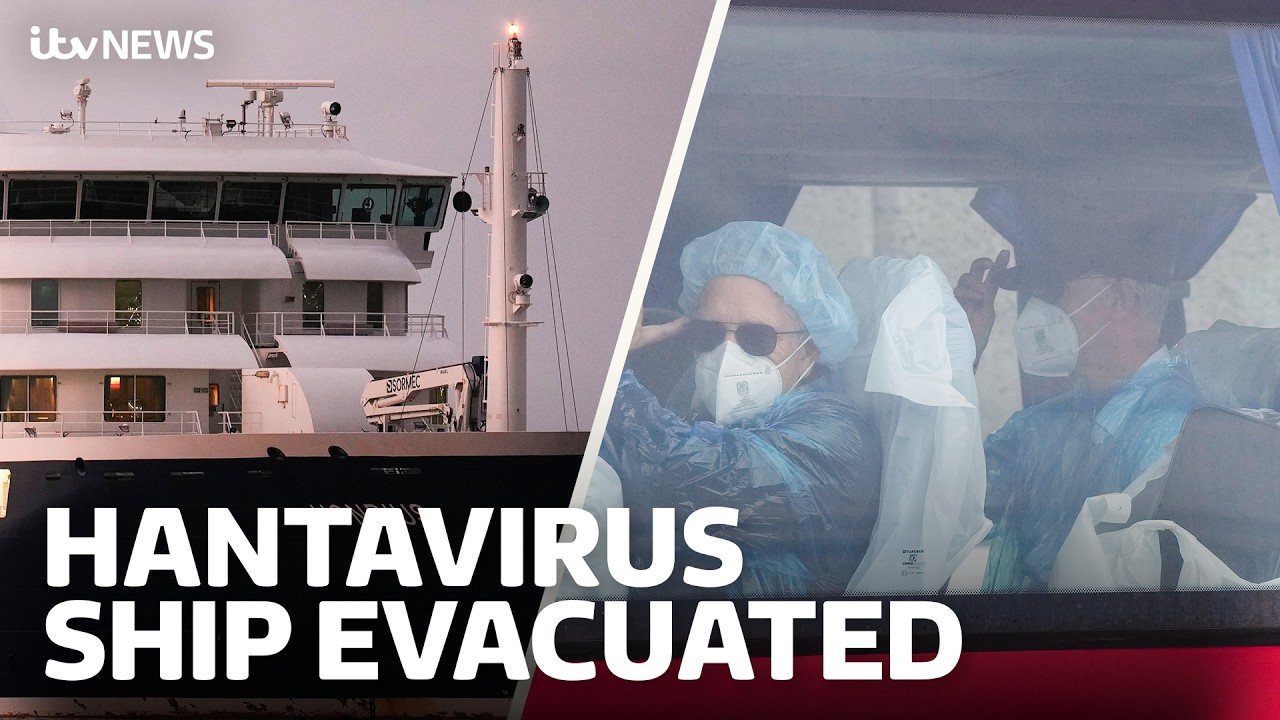
The cruise ship at the center of a growing international hantavirus scare has arrived off the coast of Tenerife, triggering a major multi-agency evacuation and quarantine operation involving Spanish authorities, medical teams, and coordination across more than 20 countries.
The MV Ondina, which has been under heightened scrutiny after reports of possible hantavirus infections on board, entered Granadilla harbor in the early hours before dawn. The ship did not dock directly at the port. Instead, it was deliberately kept offshore and anchored at a distance under the supervision of Spanish police.
The controlled arrival, combined with the rapid deployment of medical teams and security personnel, underscored the seriousness with which authorities are treating the incident — even as international health officials have sought to calm public fears.
Journalists from across the world gathered on the shoreline in Tenerife to observe the ship’s arrival, filming as medics boarded the vessel to begin testing and assessing passengers and crew.
Within hours, a carefully managed disembarkation process began.
Authorities confirmed that passengers were being removed in small groups to limit contact and ensure medical screening could be carried out systematically. Police, military personnel, and intensive care support teams were seen assisting as individuals were escorted off the vessel and transferred onto shuttle buses.
Those buses transported passengers directly to the airport, where they were processed for onward travel to their home countries — under isolation protocols.
“This operation requires the cooperation of 23 countries,” one official stated during the unfolding response.
According to local authorities, all passengers remained asymptomatic at the time of arrival.
“The boat has arrived 6:30 p.m. The entire operation is proceeding normally,” a spokesperson said, adding that disembarkation would continue throughout the day in a phased manner.
For many on board, the arrival in Tenerife marked the end of weeks of uncertainty, isolation, and fear as the ship remained at sea amid concerns of infection.
However, officials stressed that evacuating the vessel safely would take time.
Even after reaching Spanish waters, the disembarkation process was described as slow and highly complex. Passengers were being released in stages based on flight availability and logistical coordination.
“It will be coordinated once the passengers are boarding the flight. They will check which is the next flight that is available and then they start disembarking the next one,” an official explained.

When it became the turn of British passengers to leave the ship, they emerged wearing blue protective suits and face masks, reflecting the strict precautions in place. They were then transported to Tenerife Airport, where they boarded a flight bound for Manchester.
British authorities confirmed that the passengers will not be allowed to return home immediately. Instead, they will be taken to Arrowe Park Hospital on the Wirral, where they will be placed under observation and quarantine for up to 72 hours.
The quarantine facility at Arrowe Park is separate from the hospital’s main public treatment area. Preparations were reportedly underway throughout the day to receive the arriving group.
Correspondents on location described seeing hospital staff transporting boxes of equipment behind temporary blue-tarp fencing erected around a restricted section of the site.
Those passengers will be taken behind that fenced-off area once they arrive.
The hospital was previously used as one of the United Kingdom’s initial quarantine locations during the COVID-19 pandemic, a fact that has inevitably raised public anxiety and prompted comparisons with earlier global health crises.
However, both hospital officials and the World Health Organization have been at pains to stress that the current situation is not comparable to COVID-19.
The WHO has stated that the threat to the general public is believed to be low, and that existing precautions are largely preventative.
Hospital officials have also urged the public not to avoid medical care.
Patients have been asked to continue attending routine appointments and seeking treatment as normal, with reassurance that the quarantined individuals will be isolated away from other hospital areas.
British officials emphasized that those evacuated from the MV Ondina had already tested negative before boarding their flight from Tenerife.
They were also not showing symptoms at the time of departure.
Once in quarantine, the passengers will undergo reassessment during the 72-hour observation period. If they continue to test negative and remain symptom-free, they will then be permitted to leave hospital supervision and continue self-isolation outside the facility.
At the time of reporting, the flight carrying the British passengers was still en route to the UK, expected to land within hours before onward transfer to the hospital.
While the Tenerife evacuation operation continued, British authorities confirmed a separate medical response linked to the same cruise ship.
A team of British Army medics has been deployed to the remote island of Tristan da Cunha in the South Atlantic Ocean to provide urgent support to a British national suspected of contracting hantavirus.
Tristan da Cunha is one of the most isolated inhabited islands in the world, and the deployment highlights the seriousness of contingency planning underway.
Six paratroopers and two clinicians were reported to have landed in the British overseas territory equipped with oxygen supplies and other emergency medical equipment. Their mission is to deliver medical support to the patient while further assessments take place.
Officials said the individual is suspected of having been exposed to the virus aboard the MV Ondina.
Hantavirus is typically transmitted through exposure to rodents or their droppings, though certain strains have been associated with human-to-human transmission in rare circumstances. The situation on the ship has raised concerns due to the confined environment and international passenger mix.
Despite the heightened security presence and strict isolation measures, officials have continued to stress that the incident is being treated with caution rather than panic.
The Spanish-led evacuation operation, combined with the UK’s hospital quarantine response and the military medical deployment, illustrates how seriously European authorities are treating potential infectious disease risks — particularly in the post-COVID era, where rapid containment has become a political and public expectation.
For now, the central question remains whether any confirmed hantavirus cases will emerge from the passengers being screened and quarantined, and whether the outbreak will remain contained to the vessel.
As passengers continue to disembark in stages, international health agencies are expected to monitor the situation closely, with further updates likely in the coming days.


