
In an unforgettable turn of events, Coronation Street delivered a storyline that has fans buzzing across social media: the secret wedding of Kit Green and Sarah Platt. The seemingly ordinary cobbles have once again been transformed into a stage for high-stakes drama, deception, and emotional complexity, leaving the Weatherfield community—and viewers—utterly speechless.
The Wedding That Shocked the Street
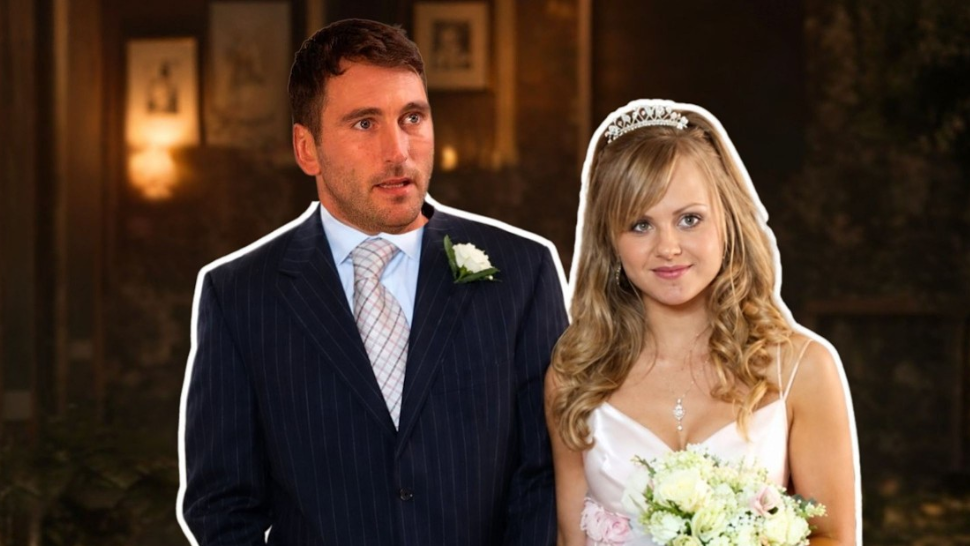
This week’s episodes revealed that Kit and Sarah tied the knot in a clandestine ceremony, a move that seemed to catch even their closest friends off guard. Unlike typical soap weddings, which are filled with public fanfare and community involvement, this union was shrouded in secrecy. The decision to marry quietly underscores the couple’s complicated circumstances: both are enmeshed in a web of secrets, lies, and past transgressions, making a public ceremony impossible.
The revelation has far-reaching implications, not just for their relationship, but for the broader landscape of Weatherfield. While the union is a personal triumph, it is also steeped in moral ambiguity, with the couple’s shared complicity in past crimes casting a long shadow over what should have been a joyful milestone.
Sarah Platt: A Mother With a Dark Secret
Sarah, portrayed by Tina O’Brien, continues to grapple with the consequences of her actions surrounding Theo Silverton’s death. The night on the scaffolding remains fresh in her mind: a terrifying confrontation where Sarah, acting in self-preservation, struck Theo with a scaffolding pole, ultimately ending his life. While legally and psychologically, her act can be construed as self-defense, the emotional toll and the guilt she carries have created a fragile psychological state.
The wedding to Kit is as much about securing a new identity as it is about love. On one hand, it offers a semblance of normalcy and stability; on the other, it forces Sarah to live a lie, hiding both her crime and the extent to which she has manipulated those around her. This duality makes her one of the most compelling and morally complex characters on the cobbles today.

Kit Green: The Enigmatic Detective
Kit Green’s trajectory is equally intriguing. Introduced as a morally ambiguous detective, Kit has walked a fine line between justice and corruption. His past includes manipulating colleagues, covering for criminal activity, and exploiting trust to maintain power. While he presents himself as a dedicated officer, his personal ambitions and willingness to bend the law for personal gain have created a deeply unstable foundation for his relationship with Sarah.
The wedding is a bold narrative move, aligning Kit and Sarah not just romantically but as co-conspirators in a world of deceit. The power dynamic is striking: Kit’s authority as a detective contrasts sharply with Sarah’s vulnerability and guilt, creating a tension-filled partnership built on mutual dependence and shared secrets.
The Psychological Fallout
The psychological complexity of this storyline cannot be understated. Sarah’s guilt over Theo’s death is compounded by Kit’s morally flexible worldview, forcing her to constantly balance honesty, self-preservation, and love. The secrecy of the wedding mirrors the secrecy surrounding their past actions, turning the event into a metaphorical tightrope over a chasm of potential disaster.
Reverend Marcus Hargis’ commentary, previously featured in church newsletters, frames the wedding as a modern-day coronation—less about celebration, more about the dark reality of leadership and survival. In this case, Sarah and Kit are crowned monarchs of deception, ruling over their personal empire of lies, with every interaction in Weatherfield a potential threat to their carefully maintained facade.
Community Reaction and Social Ramifications
The secrecy surrounding the ceremony has left residents of Weatherfield reeling. Those close to the couple, including DS Lisa Swain, remain unaware of the marriage, creating tension and potential conflict. Lisa, who is investigating crimes related to Kit and Sarah, may soon confront the reality that the detective she trusts is now formally allied with the woman implicated in Theo’s death. This creates a ticking clock scenario: the revelation of their marriage could jeopardize ongoing investigations, further intertwining personal relationships with professional obligations.
The ripple effects extend to the broader cobbles, impacting neighbors, family members, and friends. Sarah’s children, including Todd, are indirectly affected by the union, forced to navigate the moral complexity of a parent living a double life. Meanwhile, Kit’s colleagues may view the marriage as a potential conflict of interest, further complicating his professional life.
Power Dynamics and Moral Ambiguity
The pairing of Kit and Sarah is a textbook study in power and moral ambiguity. Kit’s history as a manipulative detective is balanced against Sarah’s survival instincts, creating a symbiotic relationship fueled by shared culpability. The marriage consolidates their bond, but also ties them to each other in ways that amplify risk: one misstep could unravel their lives entirely.
Fans have been quick to debate whether Kit is a villain, a survivor, or something in between. His manipulation of Beth Tinker and other residents highlights his cold-blooded pragmatism, yet his genuine care for Sarah introduces nuance. Similarly, Sarah’s actions, while criminal, stem from self-preservation and fear, raising questions about culpability and redemption.
Viewer Reactions
Social media has erupted following the reveal of the secret wedding. Fans are split: some view the union as a thrilling twist that deepens the suspense, while others question the morality of celebrating a marriage built on lies and criminal activity. Reddit threads and Twitter conversations are alive with speculation about the long-term implications for both the couple and the community at large.
Viewers have highlighted the symbolic resonance of the wedding: a traditional celebration juxtaposed with the moral decay of its participants. The storyline forces audiences to confront uncomfortable questions about justice, loyalty, and the nature of love under extreme circumstances.
What Lies Ahead
Looking forward, Coronation Street is poised to explore the fallout from this controversial union. Key plot points likely to dominate upcoming episodes include:
Lisa Swain’s discovery of the marriage and her subsequent actions, potentially placing Kit and Sarah under increased scrutiny.
The psychological toll on Sarah as she balances guilt, marital obligation, and the ongoing investigation into Theo’s death.
Kit’s navigation of professional and personal conflicts, particularly as his colleagues and superiors begin to question his impartiality.
The impact on Sarah’s children and extended family as they grapple with the moral complexities of their mother’s decisions.
Potential legal consequences as past crimes intersect with current relationships, testing the limits of loyalty and trust.
The secret wedding is more than a romantic milestone—it is a catalyst for tension, drama, and ethical exploration, exemplifying the enduring ability of Coronation Street to combine soap opera storytelling with psychological depth.
Kit and Sarah’s clandestine wedding has not only stunned the residents of Weatherfield but also challenged viewers’ perceptions of morality, love, and justice. The union encapsulates the essence of modern soap drama: a mix of emotional resonance, ethical ambiguity, and suspenseful storytelling.
As the cobbles adjust to this seismic shift, one question looms: can a marriage built on secrets and complicity survive, or will the weight of their past actions ultimately tear them apart?
Coronation Street continues on ITV1 weekdays at 8:30 p.m., with episodes also available to stream on ITVX, ensuring fans can follow every twist, turn, and revelation in this high-stakes narrative.


