
- Repot every 2–3 years or when roots poke out, pups overcrowd, or water drains too fast.
- Use a fast-draining soil — like a succulent mix with perlite or bark — to prevent rot.
- Wait 2–5 days before watering after repotting to let the roots recover.
- Repot pups once they have roots and are 4–5 inches tall — they’ll thrive with space.
- Post-repot growth may be slow — give it time, light, and minimal water to bounce back.

I used to leave my snake plants in the same pot for years — thinking if they looked okay, they were okay.
But over time, I learned that repotting isn’t just about giving them more space — it’s about keeping them healthy, strong, and growing.
Snake plants are slow growers, but they still expand their roots and push out pups under the surface.
If you ignore those cues for too long, they’ll stall, slump, or even rot.
We want to explain exactly when to repot, how often to do it, and what kind of soil and care they need after the move.
I’ll also show you how to handle baby pups, cuttings, and what to expect in the weeks after repotting.
🕵️♀️ How Do I Know When to Repot My Snake Plant?
You don’t need to guess.
Your snake plant will drop plenty of clues when it’s ready for a new pot — you just have to know what to look for.
Here are the signs I’ve learned to pay attention to:
🪴 Roots Circling or Poking Out
I usually spot this one when I lift the plant out for watering or cleaning.
The roots are packed tightly around the base and often pushing out through the drainage holes.
It’s like the plant is trying to escape!
This tells me it’s completely root-bound, meaning there’s no room left for new growth or water retention.
If I don’t act soon, the plant may stop thriving altogether.
🌿 Pups Pressed Against the Pot
I love it when my snake plants send up pups (baby shoots), but when those new leaves are jammed up against the edge of the pot — or even starting to lift the main plant out of the soil — it’s a clear signal that space is too tight.
When this happens, I usually repot the whole plant into a slightly larger container, or I divide the pups and pot them separately.
It keeps everything happier and growing strong.
💧 Water Rushes Straight Out
When I water my snake plants — especially the ones I haven’t repotted in a while — I notice the water sometimes rushes straight out of the drainage holes without soaking into the soil at all.
That’s a red flag.
It means the soil is either old and hydrophobic (won’t absorb water), or the roots are so dense that water can’t reach the center.
Either way, the plant isn’t getting the moisture it needs.
⚠️ Slowed Growth or Floppy Leaves
If my Sansevieria hasn’t produced any new leaves in months, or if it starts to look floppy and tired, I usually check the root situation.
Tight roots or compacted soil can choke out growth and cause stress — even if the plant looks okay from a distance.
It’s easy to overlook this one because Mother in Law Tongue Plants are slow growers anyway.
But once you repot and refresh the soil, you often see a quick rebound in leaf strength and color.
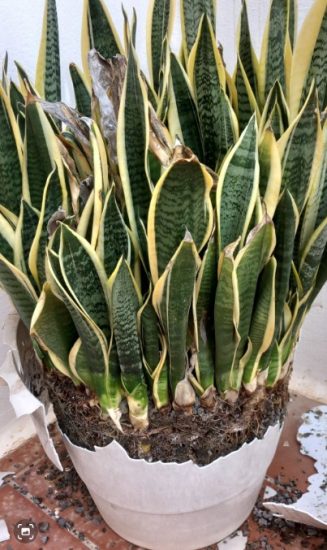
🪨 Cracked or Bulging Pots
This actually happened to me once: I had a clay pot completely split down the side because a large Sansevieria had outgrown its space so aggressively.
If your pot looks like it’s warping, bulging, or cracking, your plant is probably overdue for an upgrade.
🗓️ How Often to Repot Snake Plant
On average, I aim to repot every 2–3 years, depending on how fast each variety grows.
My Bird’s Nest needs it a bit more often, while my Whale Fin has happily lived in the same pot for nearly 4 years.
But honestly?
I don’t follow a strict schedule.
I go by the signs above.
If I see roots getting tight, pups crowding, or watering issues, that’s when I reach for a new pot and fresh soil.
If your plant is showing any of these signs, don’t wait too long.
And when you do repot, be sure to use a well-draining container — here’s a breakdown on why drainage holes matter.


