

Wandering Jew, also known as Tradescantia, is a fast-growing, beautiful houseplant loved for its vibrant, trailing vines and striking purple, green, and silver leaves.
Propagating Tradescantia in water is an easy and effective method, and in this guide, I’ll walk you through the process step by step.
Why Propagate Wandering Jew in Water?
Propagating in water is simple and offers an exciting way to watch new roots grow.
This method allows you to easily monitor the progress of your cutting and is an excellent choice for beginners. Plus, it eliminates the mess that can come with soil propagation.
Materials Needed
To propagate your Wandering Jew in water, gather the following materials:
- A healthy Wandering Jew plant
- A sharp pair of scissors or pruning shears
- A glass jar or vase (clear is best for watching the roots grow)
- Fresh water (preferably room temperature)
- Optional: rooting hormone (although not necessary)
Step-by-Step Guide to Propagate Wandering Jew in Water
Step 1: Choose a Healthy Cutting
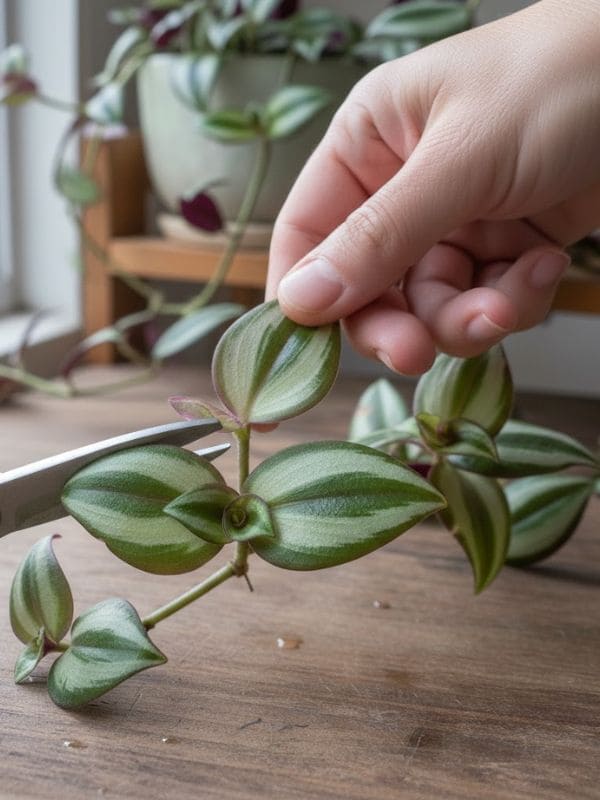
Begin by selecting a healthy, mature Wandering Jew plant. Look for a vine with at least 2-3 sets of leaves, and avoid any sickly or yellowing stems.
Using clean scissors or pruning shears, take a cutting of about 4-6 inches long, making sure to cut just below a node (the small bump where leaves and roots emerge).
Step 2: Trim Excess Leaves
Once you have your cutting, trim any excess leaves from the bottom half of the stem. This will prevent the leaves from sitting in the water, which can cause rot.
Leave at least one or two leaves at the top of the cutting for photosynthesis to occur while the roots develop.
Step 3: Place the Cutting in Water
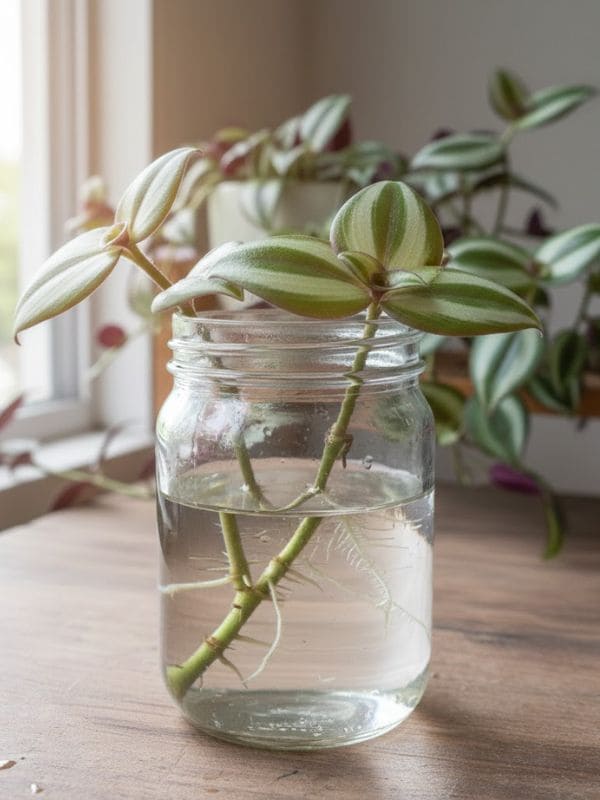
Place the cutting in your glass jar or vase, ensuring that the cut end is submerged in water. The leaves should not be in the water to avoid rot.
Ideally, place the jar in a spot that receives indirect sunlight to encourage rooting.
Make sure the water level remains high enough to cover the bottom of the stem but not the leaves.
Step 4: Wait for Roots to Grow
Patience is key! In about 1-2 weeks, you should start to see roots forming.
It’s helpful to change the water every few days to keep it fresh and prevent any buildup of algae or bacteria that could harm your cutting.
Keep an eye on the roots , once they are about 1-2 inches long, the cutting is ready for the next step.
Step 5: Potting the New Plant
After 3-4 weeks, or when the roots are long enough, it’s time to pot your new wandering jew cutting.
Prepare a small pot with well-draining potting mix. Then gently transfer your rooted cutting into the soil, covering the roots and leaving the top leaves exposed.
You need to water the plant well, and place it in a spot with bright, indirect sunlight to encourage further growth.
Tips for Success
- Choose the right container: Clear glass containers work best because you can easily monitor root growth. However, any container that allows the cutting to remain submerged will work.
- Water quality matters: Always use fresh water, and try to avoid distilled water, as it can lack essential minerals.
- Avoid direct sunlight: While the plant needs light to grow, direct sunlight can lead to algae buildup or cause the water to overheat, damaging the cutting.
- Change water regularly: Changing the water every few days keeps it clean and helps avoid fungal or bacterial growth.
- Rooting hormone: While not necessary, you can use rooting hormone to encourage faster root development. Simply dip the cut end of the stem into the hormone before placing it in water.
Troubleshooting Common Issues
1. No Roots After Several Weeks
If your cutting isn’t developing roots after several weeks, it may be because the cutting wasn’t healthy enough to begin with.
Always make sure you’re using a healthy piece with at least one node, as roots grow from the node.
Additionally, the water temperature plays a significant role in rooting. Cold water can slow down the process, while room temperature water encourages faster root development.
If the water is too cold, try changing it to room temperature.
Some gardeners also add a small amount of liquid fertilizer to the water to promote root growth, but avoid overfeeding, as it could harm the cutting.
2. Yellowing Leaves
Another common issue is yellowing leaves. This can happen if the leaves are submerged in the water, leading to rot.
Always make sure that only the stem is submerged, and the leaves stay above the water level.
If you notice yellowing despite this, check the water quality. If the water has become stagnant, it could be causing the problem.
Changing the water every few days will help prevent this. Excessive sunlight can also cause leaves to yellow and scorch.
3. Root Rot
Root rot is another issue that can arise, especially if the water becomes dirty or the cutting is left in stagnant water for too long.
If the roots become mushy or slimy, they’re likely rotting. In this case, remove the rotting parts immediately and place the cutting in fresh water.
It’s also important to clean the jar or vase regularly to prevent bacteria and algae buildup.
Make sure the water level is just right so that only the lower part of the stem is submerged, and no leaves are touching the water.
4. Algae Growth in the Water
Algae thrive in water exposed to too much direct sunlight.
If you notice algae forming in the water, try moving the container to a location with indirect light.
If the algae growth is persistent, change the water more frequently and clean the container with a mild vinegar solution to eliminate it.
5. Stunted or Slow Growth
Sometimes, the cutting may grow very slowly, or not at all. This can happen if the cutting isn’t getting enough light.
Ensure that the cutting is receiving plenty of indirect light. A bright spot is ideal, as it will help the cutting grow faster.
If growth remains slow, you can also add a diluted liquid fertilizer to boost growth, but be careful not to overfertilize, as this can harm the plant.
6. Leaves Drooping or Wilting
If you notice the leaves drooping or wilting, it’s usually a sign that the cutting is stressed. This can happen if the cutting hasn’t developed enough roots to support itself.
Make sure the water level is high enough to cover the stem, but not the leaves.
If the wilting persists, consider potting the cutting in soil once it has developed enough roots.


