
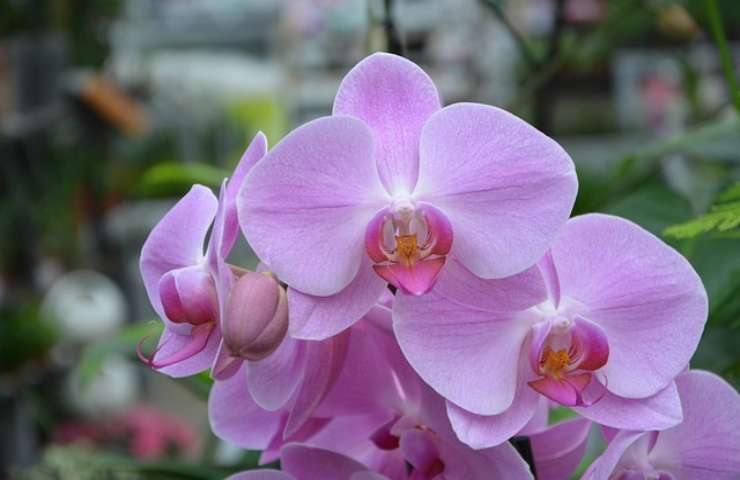
4. Ideal Location for Orchid Planting
Orchids thrive in locations that receive abundant light, with a preference for areas facing south or east. While direct sunlight must be avoided, the chosen spot should be brightly lit, as insufficient light is a primary factor contributing to orchid withering. Maintaining the ideal temperature is crucial, ranging between 23 – 24°C as the maximum and 16 – 17°C as the minimum.
5. Balancing Humidity and Moisture
Orchids demand a careful balance of humidity. Excessive humidity can damage flowers, while insufficient humidity can result in wrinkled leaves turning yellow. The sweet spot for humidity is around 70%, making bathrooms or kitchens ideal locations. Placing a saucer filled with expanded clay or gravel, supplemented with a touch of water, facilitates the necessary humidity without causing stagnation.
6. Watering Orchids: A Delicate Balance
Orchids require minimal irrigation, only when the soil is dry. During winter, once a week suffices, increasing to 2 or 3 times in summer. Watering should be done in the morning, and vigilance against stagnation is crucial to prevent root rot. Additionally, a light misting with demineralized or rainwater in the morning can contribute to optimal humidity levels. Implementing these simple yet crucial tips ensures the prolonged blooming of your orchid, allowing it to thrive for years to come.


