
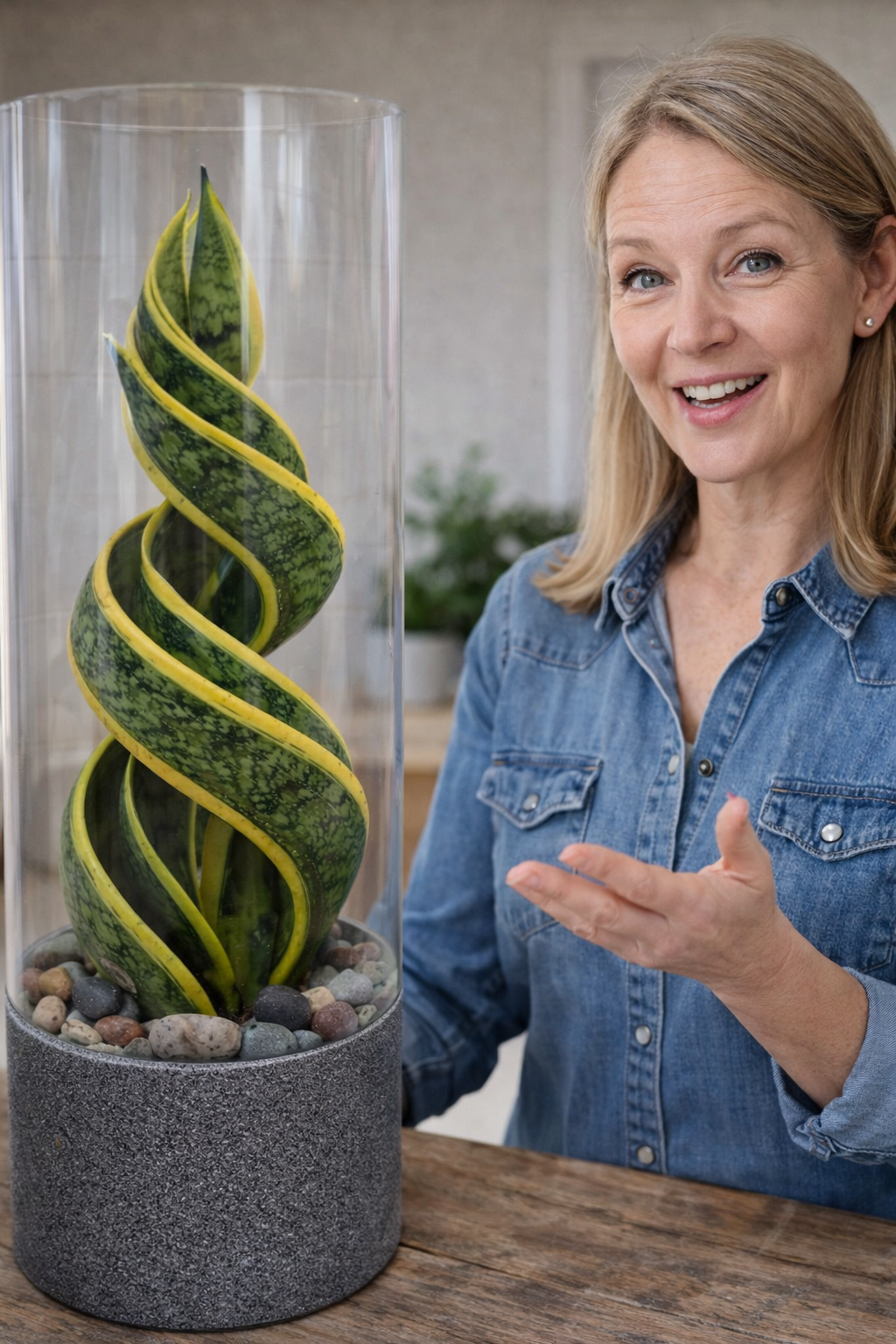
Snake plants are already known for their strong vertical shape and low-maintenance nature. But lately, a new styling trend has been quietly spreading among indoor gardeners and interior designers — spiral training.
Instead of letting the leaves grow straight up, some growers gently guide the plant into a structured spiral form. The result isn’t just decorative… it transforms a simple plant into a modern statement piece that instantly upgrades any interior space.
The good news? This technique doesn’t require complicated tools — only patience, correct positioning, and a clear understanding of how snake plants grow.
Why Spiral Training Works on Snake Plants
Snake plants grow in slow, steady layers. Their leaves respond strongly to light direction and gentle support. By guiding new growth gradually, you can influence the shape without stressing the plant.
Benefits of spiral training include:
- Creates a designer-style indoor plant
- Encourages balanced upward growth
- Saves space in small interiors
- Adds visual height to modern décor
Unlike aggressive shaping, this method respects the plant’s natural structure.
Step-by-Step Spiral Training Method
Step 1 — Choose the Right Plant
Start with a young snake plant that has flexible leaves. Older rigid leaves are harder to guide.
Step 2 — Select a Spiral Support
Use a bottle, cylinder, or vertical support placed in the center of the pot. This becomes your shaping guide.
Step 3 — Wrap Slowly Over Time
Gently guide the leaves around the support — never force them. Small adjustments every few days work best.
Step 4 — Rotate Toward Light
Light direction encourages natural bending. Turning the pot slightly helps create a smooth spiral curve.
Step 5 — Remove Support Gradually
Once the plant adapts to the shape, you can slowly reduce support and let the structure hold itself.
Spiral Training Comparison Table
| Method | Difficulty Level | Visual Impact | Risk Level | Best For |
|---|---|---|---|---|
| Natural growth | Very easy | Minimal styling | Very low | Beginners |
| Tight binding | Hard | Artificial look | High | Not recommended |
| Gentle spiral training | Moderate | Modern designer look | Low | Indoor décor |
| Light-guided shaping | Easy | Subtle curves | Very low | Small spaces |
Placement Tips for a Perfect Spiral Look
- Use neutral pots to highlight the shape
- Place near bright indirect light
- Avoid crowded shelves — give the spiral space
- Rotate weekly to maintain symmetry
Designers often place spiral snake plants near entryways or living room corners because they create a vertical focal point without adding clutter.
Common Mistakes to Avoid
- Wrapping leaves too tightly
- Using hard wire instead of soft support
- Forcing stiff mature leaves
- Ignoring light direction
Remember: spiral training is about guidance, not pressure.


