

Stop Using Only Soil — Try This Anthurium Water Method Instead
💦Stop Using Only Soil — Try This Anthurium Water Method Instead
Anthuriums are known for their glossy leaves and striking heart-shaped blooms. Traditionally, these tropical plants are grown in airy potting mixes containing bark, peat, and perlite. However, many indoor gardeners are now experimenting with water-based growing methods that allow Anthuriums to thrive without traditional soil.
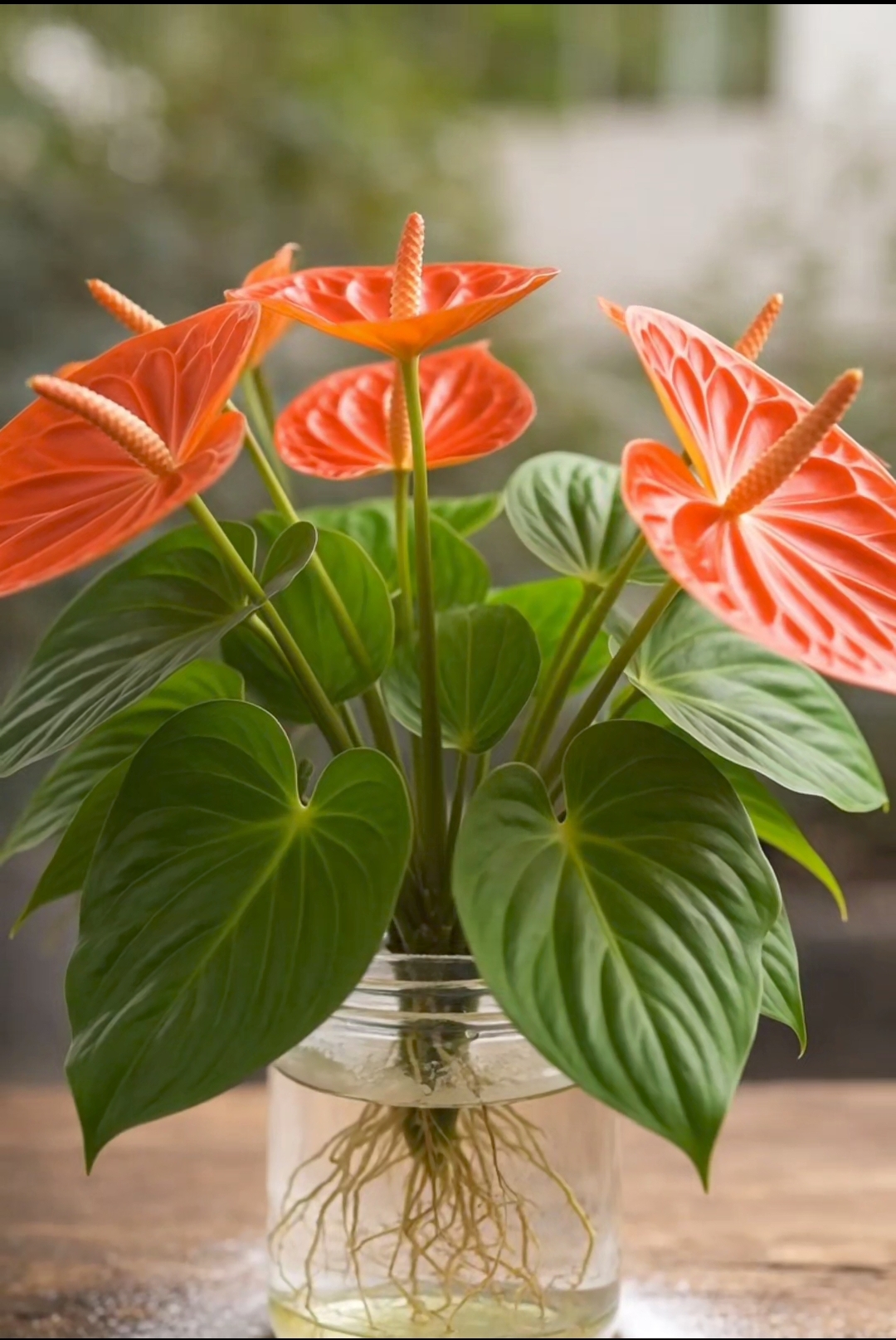
The simple jar technique shown in the image demonstrates how Anthuriums can grow with their roots suspended in water while the foliage and flowers remain above the container. This clean and minimalist approach is gaining attention among indoor plant enthusiasts.
🌿 What Is the Anthurium Water Method?
The Anthurium water method involves growing the plant in a clear container filled partially with water, allowing the roots to stay hydrated while remaining visible.
Instead of being buried in soil, the roots sit inside the jar and absorb water directly. This technique resembles a basic hydroponic-style system, where water replaces traditional potting media.
Because Anthuriums naturally grow in humid tropical environments, their roots can adapt well to water when properly maintained.
💧 How the Water Method Works
The goal is to keep the roots hydrated without submerging the entire plant.
Gardeners usually follow this process:
- Start with a healthy Anthurium plant
Choose one with strong roots and healthy leaves. - Carefully remove soil from the roots
Rinse gently to avoid damaging them. - Place the plant inside a glass jar
Roots should sit inside the container. - Add water to cover the lower roots
The plant crown must stay above water. - Place the jar in bright indirect light
This encourages steady growth.
The clear container also allows you to monitor root health easily.
🌱 Why Many Gardeners Prefer This Method
The water-growing technique offers several advantages.
It eliminates soil mess indoors
It makes root health visible
It reduces risk of soil pests
It creates a decorative modern display
It simplifies watering routines
For many people, the biggest appeal is the clean and elegant look of plants growing in glass containers.
⚠️ Important Care Tips for Water-Grown Anthuriums
Although Anthuriums can adapt to water environments, a few precautions help maintain healthy growth.
Avoid these mistakes:
❌ Submerging the plant crown
❌ Letting water become cloudy or stagnant
❌ Exposing the jar to harsh direct sunlight
❌ Using cold water
Changing the water periodically helps maintain a healthy environment for the roots.
🪴 Ideal Conditions for Anthurium Growth
Whether grown in soil or water, Anthuriums thrive under similar environmental conditions.
Best conditions include:
Bright indirect light
Warm indoor temperatures
Moderate humidity
Clean water or well-draining soil
Occasional light feeding
Healthy roots often lead to consistent flowering throughout the year.
📊 Anthurium Care Overview
| Factor | Ideal Condition | Why It Matters |
|---|---|---|
| Light | Bright indirect | Encourages blooms |
| Water | Fresh and clean | Protects root health |
| Container | Glass or clear vase | Allows root monitoring |
| Temperature | Warm indoor climate | Supports tropical growth |
| Feeding | Light seasonal feeding | Maintains plant vitality |
❓ Anthurium Care FAQ (Garden Section)
1. Can Anthuriums grow permanently in water?
Some plants adapt well when roots remain healthy.
2. How often should water be changed?
Every 1–2 weeks is usually recommended.
3. Do Anthuriums still bloom in water?
Yes, if light and nutrients are adequate.
4. Can fertilizer be added to water?
Occasionally, in very diluted amounts.
5. Why do roots turn brown?
Often from stagnant water or lack of oxygen.
6. Do Anthuriums need humidity?
Yes, they prefer moderate to high humidity.
7. Is tap water safe?
Filtered or room-temperature water works best.
8. Can plants move back to soil later?
Yes, with careful transition.
9. What light conditions work best?
Bright but indirect sunlight.
10. Are Anthuriums beginner-friendly?
Yes, with proper watering and light.


