
LANCASHIRE’S REFUGEE RESETTLEMENT REVOLT: A LOCAL DECISION THAT COULD RESHAPE BRITAIN’S NATIONAL MIGRATION DEBATE
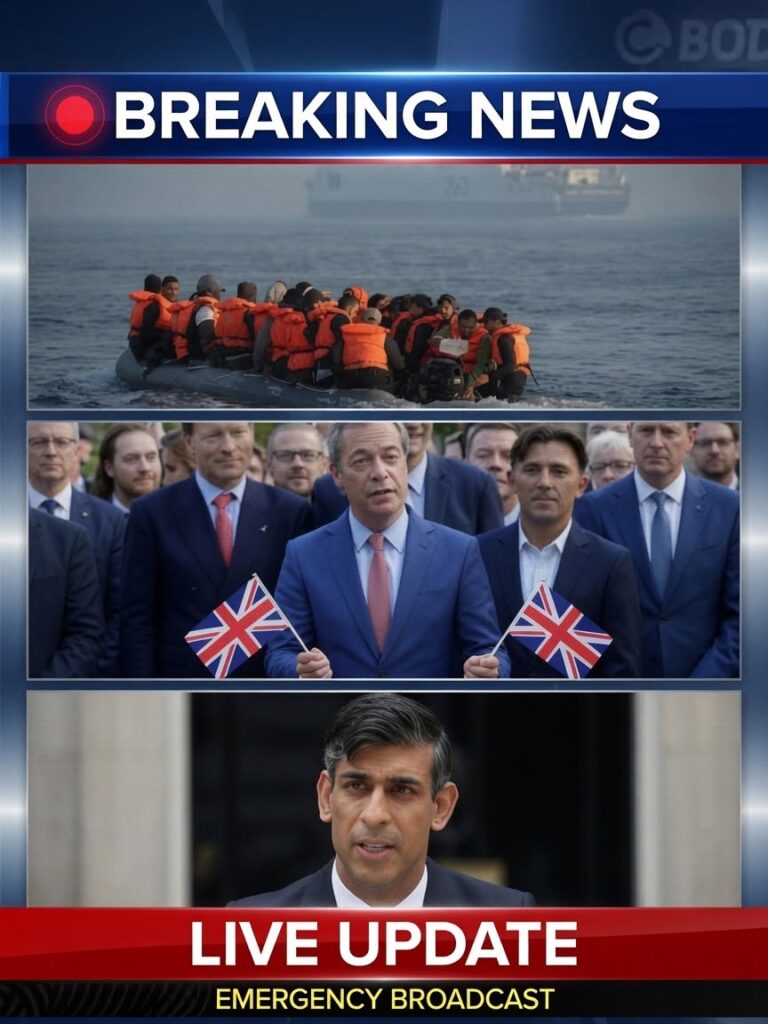
LANCASHIRE’S REFUGEE RESETTLEMENT REVOLT: A LOCAL DECISION THAT COULD RESHAPE BRITAIN’S NATIONAL MIGRATION DEBATE
A proposal to withdraw from government-backed refugee programmes has triggered a far wider argument over housing, public spending, humanitarian responsibility and the power of local councils
Lancashire has found itself at the centre of a national political storm after the Reform UK-led county council announced plans to end its participation in two government-backed refugee resettlement programmes. Supporters have presented the move as a long-overdue attempt to place local residents, veterans and struggling families at the front of the queue for public support. Critics, however, have accused the council leadership of using vulnerable refugees to make a political statement while overstating the financial savings that withdrawal could deliver. The controversy has rapidly moved beyond the boundaries of Lancashire, raising a question with implications for councils throughout Britain: should local authorities be able to refuse participation in refugee resettlement when they believe their housing and public services have reached capacity? Yet the most important detail is also the one most easily lost in dramatic headlines. The announcement concerned an intention to withdraw, while the council itself said that any formal policy change would require a decision by its cabinet.
The proposed withdrawal concerns the United Kingdom Resettlement Scheme and the Afghan Resettlement Programme, two routes designed to provide organised and lawful protection for people displaced by persecution, conflict or danger. Lancashire County Council has historically coordinated resettlement activity across a wider regional partnership involving district and unitary authorities with responsibility for housing. That coordinating role means the dispute is not merely about a single building, grant or family placement. It concerns an established local network that has provided arrival support, English-language assistance, health referrals, employment guidance and integration services. Lancashire’s own published information continues to describe the county as supporting refugees through several resettlement routes, while its refugee integration infrastructure has developed over many years. The possibility of dismantling or reducing that structure therefore raises practical questions about staff, contracts, funding commitments and support for people who have already been resettled.
Joshua Roberts, Lancashire County Council’s cabinet member responsible for rural affairs, the environment and communities, argued that resources connected to refugee resettlement should instead be directed toward vulnerable Lancashire residents and military veterans. Reform UK framed the proposal as an issue of fairness, maintaining that people who live, work and contribute locally should not feel disadvantaged when seeking housing or essential support. The language was politically powerful because it connected refugee policy with everyday frustrations that already exist among many households: long waits for suitable accommodation, pressure on health services, financial insecurity and concern over the condition of local government provision. For residents who believe national politicians have ignored these pressures, the announcement may sound like a council finally asserting local control. However, critics dispute the suggestion that refugee funding can simply be transferred into unrelated local services, because the programmes are largely financed through central government grants designated for resettlement work.
That funding question sits at the heart of the argument. Reform UK representatives have said that participation creates wider pressure on housing and council resources even when direct programme costs are covered by Westminster. Their reasoning is that a grant may fund a dedicated service without eliminating the indirect consequences of additional demand for schools, healthcare, social support or affordable accommodation. Opponents respond that withdrawing may remove ring-fenced government money without producing the wider savings being promised. They also argue that the council cannot necessarily redirect a Home Office resettlement grant to veterans, social care or other preferred services. If Lancashire stops administering the programmes, central government could potentially place refugees elsewhere or make alternative administrative arrangements. Therefore, whether the proposal would significantly improve local finances is not yet established and would depend heavily on the final terms of withdrawal.
Housing has become the most emotionally charged part of the controversy because it gives an abstract national debate a visible local dimension. Across Britain, residents facing homelessness or years on housing registers frequently ask why suitable homes appear unavailable to them. Political campaigns can transform that frustration into the impression that every home occupied by a refugee is a home directly removed from a British applicant. In practice, housing allocation is governed by multiple legal duties, funding streams, eligibility rules and local arrangements. Refugees who have been granted status or humanitarian protection can be eligible to apply for council housing, but eligibility does not automatically guarantee immediate accommodation or priority over every other applicant. Lancashire’s own public guidance explains that eligible refugees may join local housing registers and seek homelessness assistance, placing them within existing statutory frameworks rather than outside the rules entirely.
For supporters of Lancashire’s proposed approach, however, technical distinctions do not resolve the underlying perception of scarcity. They argue that when homes, school places, medical appointments and social services are visibly limited, any additional obligation deserves close democratic scrutiny. From this perspective, the issue is not necessarily hostility toward refugees but the ability of a community to provide adequate support without reducing standards for people already living there. A resettlement programme that works well in a prosperous area with available housing may place much greater strain on a district facing deprivation, shortages and budget reductions. Supporters therefore see local consent and measurable capacity as essential conditions for sustainable humanitarian policy. They warn that programmes imposed without credible capacity assessments may weaken public support for refugee protection itself.
Critics answer that this framing creates a false competition between refugees and local residents, two groups that may both require protection from poverty, insecurity and homelessness. They note that many resettled people arrive through highly controlled legal routes after being identified as vulnerable, rather than crossing borders irregularly or entering the asylum system without prior authorisation. Afghan programmes, for example, have included people who worked with or assisted British operations and who may face serious danger because of those connections. Lancashire previously committed to supporting hundreds of people under Afghan relocation and resettlement routes. For humanitarian organisations, turning away from such programmes risks sending a message that commitments made to endangered allies or families can be abandoned when domestic politics becomes difficult.
This distinction between resettlement, asylum dispersal and irregular migration is vital. Refugee resettlement generally involves people selected overseas and brought to Britain through an authorised process. Asylum seekers, by contrast, apply for protection after arriving or presenting a claim, while asylum dispersal involves the placement of applicants in accommodation during the decision-making process. Lancashire County Council says it does not play a direct role in asylum dispersal, although it works with district councils to coordinate education, health and integration support. Nevertheless, political debate often places all these categories under the single label of “migration,” creating the impression that withdrawing from a refugee programme would directly stop small-boat crossings or prevent asylum hotels from being opened. It would not necessarily do either. Leaving resettlement programmes affects specific legal and humanitarian routes, not the entirety of national border and asylum policy.
The UK Resettlement Scheme was created to consolidate earlier refugee routes and provide a pathway for vulnerable people identified for protection. Lancashire’s own description states that the scheme brought together the Vulnerable Persons Resettlement Scheme, the Vulnerable Children Resettlement Scheme and the Gateway Protection Programme. These were structured programmes rather than emergency responses to people arriving unexpectedly at the border. Their central objective was to offer a safe alternative to dangerous journeys and enable local authorities to prepare services before families arrived. Critics of withdrawal argue that weakening legal routes may unintentionally reinforce the smuggling model that governments say they want to defeat. When organised pathways become smaller or less available, desperate people may be left with fewer lawful options.
Yet legal routes also require communities willing and able to receive people. This is where Lancashire’s intervention could have national consequences. Britain’s resettlement system relies significantly on cooperation between central government, councils, housing providers, charities, healthcare bodies, schools and community organisations. Westminster can establish a programme and provide funding, but much of the practical work occurs locally. Councils arrange accommodation, children need school places, adults may require language training, and families often need assistance navigating healthcare, transport, employment and benefits systems. If councils conclude that participation is politically costly or administratively unsustainable, the national government may struggle to deliver its commitments. Lancashire’s proposal therefore represents a test of whether refugee policy can function when local and national priorities diverge.



Opposition councillors in Lancashire have described the move as a political stunt, suggesting that it was designed to generate publicity rather than solve a clearly identified financial problem. They argue that because the programmes are centrally funded, withdrawal could simply deprive the region of resources and employment while moving responsibility elsewhere. Some also question whether the announcement was made before the necessary cabinet paper, impact assessment and consultation had been completed. The council’s initial response reinforced that concern by emphasising that a party statement was not itself a formal policy decision. For opponents, responsible government requires more than a dramatic declaration; it requires evidence about costs, contractual obligations, affected families, district-council relationships and the consequences for staff.
Supporters reject the suggestion that opposition to the programme is merely symbolic. They say ring-fenced grants do not mean the wider system is cost-free and that local government has a duty to consider cumulative pressures rather than only the balance sheet of a single department. They also argue that councils should not remain in national programmes automatically simply because previous administrations joined them. Elections, in this view, are supposed to produce policy change, especially when a governing party has campaigned on stricter migration policies and prioritising existing residents. Lancashire’s Reform UK leadership can claim that its approach reflects the political mandate on which it took control of the authority. The dispute is therefore also a debate about democracy: does electoral victory justify an immediate change of direction, or should humanitarian programmes be protected from sharp political reversals?
The answer may depend on what happens to people already living in Lancashire under the schemes. A future withdrawal could apply only to new arrivals, or it could involve changes to the support structure serving refugees who are already settled. These possibilities carry very different consequences. Ending future participation would reduce new placements but might leave current services intact for an agreed period. A broader dismantling of the integration team could affect language classes, employment assistance, health coordination and casework for people who have already begun rebuilding their lives. Lancashire’s refugee integration operation has coordinated arrivals and support through more than ten refugee and asylum routes, and the council’s service specification has described the programme as centrally grant- funded. Any formal decision would therefore need to explain precisely which services would stop, when they would end and which organisation would assume responsibility.
The Afghan element makes the political decision particularly sensitive. Britain’s Afghan resettlement commitments emerged from the collapse of the Western-backed government and the return of Taliban rule. Some beneficiaries had worked with British forces, diplomatic missions or associated institutions, while others were identified as being at serious risk. Lancashire has publicised work supporting Afghan families, including women rebuilding their lives through local community activities. To supporters of resettlement, these examples demonstrate that the programmes are not an anonymous transfer of population but a structured attempt to honour obligations and help families become independent. To critics of current policy, individual success stories do not eliminate the need to assess long-term capacity. The debate therefore repeatedly returns to the same unresolved question: how should Britain balance moral responsibility abroad with material pressures at home?
There is also a deeper disagreement over what integration requires. Refugee organisations argue that early investment in English lessons, employment guidance, health support and community connections can reduce long-term dependency. If people are helped to find work, understand local institutions and participate in society, the initial cost may generate broader social and economic benefits. The Refugee Council has argued that well-supported refugees can make meaningful contributions to their communities and the economy. Critics may agree with the principle while questioning whether every council possesses the housing supply, labour market and service capacity needed to achieve those outcomes. Integration cannot be measured simply by the number of arrivals; it must also be judged by employment, language ability, educational outcomes, community relations and long-term independence.
Lancashire’s announcement also reflects a wider transformation in British local politics. Councils are increasingly becoming battlegrounds for national issues including migration, climate policy, cultural identity and public spending. Local leaders may have limited authority over borders, visas or asylum decisions, yet they control or influence many services through which national policy is experienced. A family does not encounter “the state” as an abstract concept; it encounters a school, housing officer, social worker, library, doctor or council department. When those services are under pressure, residents often direct anger toward the institution closest to them, even when the central government controls funding and legal rules. This allows local migration decisions to become powerful political symbols regardless of their numerical impact. The controversy is also likely to intensify arguments within the Labour government about the future of safe and legal routes. Ministers face pressure from one side to reduce migration, strengthen enforcement and respond to councils reporting capacity problems. From the other side, refugee advocates war that restricting authorised pathways may increase desperation, prolong family separation and undermine the government’s claim that people should use legal routes rather than irregular ones. Britain cannot credibly insist that refugees apply through organised systems while allowing those systems to shrink without replacement. At the same time, national leaders cannot assume that local authorities will indefinitely accept responsibilities without convincing communities that the arrangements are properly funded and fairly distributed.
Other councils will be watching Lancashire closely. A successful withdrawal without major legal, financial or operational consequences could encourage authorities elsewhere to reconsider their involvement. Councils governed by parties campaigning for lower migration might adopt similar policies, particularly in areas where housing shortages and budget pressures are severe. Conversely, if Lancashire loses significant funding, faces contractual disputes or discovers that central government can bypass the county council, the decision may become a warning rather than a model. Much will depend on whether the authority publishes a detailed cabinet report supported by financial figures and an operational transition plan. Until then, claims about the amount of money saved or services improved remain largely political projections.
The dispute may also expose tension between county councils and the district or unitary authorities that hold housing responsibilities. Lancashire County Council has coordinated resettlement on behalf of a wider group of councils rather than acting entirely alone. Those authorities may not share identical political priorities or assessments of local capacity. Some districts could wish to continue participating, particularly where established community organisations, housing partners or employers support resettlement. Others may welcome withdrawal. A county-level decision could therefore trigger negotiations over whether individual councils can establish alternative arrangements directly with the Home Office or another coordinating body.
For the public, transparency will be essential. Residents deserve clear figures showing how many people have been resettled, how much central funding has been received, what services it finances and what indirect costs are bome locally. They should also be told whether refugees receive automatic priority for social housing, how placements are selected and what happens after initial government support ends. Refugees and support workers deserve equal clarity about whether existing commitments will be honoured. Without that information, the debate is likely to be dominated by slogans suggesting either that local people have been abandoned or that humanitarian protection is being destroyed. Neither claim can be properly evaluated without evidence.
Lancashire’s proposal should therefore be judged not only by the strength of the rhetoric surrounding it but by its measurable results. Will more homes become available to local families? Will veterans receive additional services, and from which budget? Will council expenditure genuinely fall? Will refugees already living in the county experience disruption? Will neighbouring authorities inherit additional responsibility? These are practical questions that can eventually be answered, but they require published decisions, financial analysis and time. Political declarations may attract immediate attention, yet public policy is ultimately tested through implementation rather than headlines.
The episode also demonstrates why Britain’s migration debate remains so difficult to resolve. Humanitarian protection and local capacity are both legitimate concerns. Refugees fleeing war should not be reduced to budget entries or political symbols, but residents struggling with housing, care and basic services should not be dismissed as intolerant for asking whether their communities can cope. A durable policy must recognise both realities. It must protect people in danger while ensuring that the communities receiving them have sufficient housing, funding, planning and democratic involvement.
Lancashire has not ended Britain’s refugee debate; it has opened a more complicated phase of it. If the council formally approves withdrawal, it may become the first local authority to take such a step and could establish a precedent with consequences far beyond the county. But describing the outcome as settled before the formal decision-making process is complete risks turning a proposal into a fact. As of the reporting reviewed for this article, the most accurate conclusion is that Lancashire’s Reform UK leadership announced its intention to withdraw from the UK Resettlement Scheme and the Afghan Resettlement Programme, while the council stated that a cabinet decision was required.
The next stage will reveal whether this becomes a substantive restructuring of local refugee policy or primarily a powerful political message. Either way, the announcement has already succeeded in forcing difficult questions into the national spotlight. Who should determine a community’s capacity to accept refugees? How should costs and responsibilities be divided between Westminster and local councils? What obligations does Britain retain toward Afghans and other people brought through authorised humanitarian routes? And can refugee protection survive politically unless the government also addresses the housing and public-service pressures affecting existing residents? Lancashire’s decision may be local in origin, but the answers will help shape the future direction of migration and humanitarian policy across the United Kingdom.


